Across the logistics and supply chain sector, sustainability and compliance have become the new norm for how operations are designed, managed, and reported.
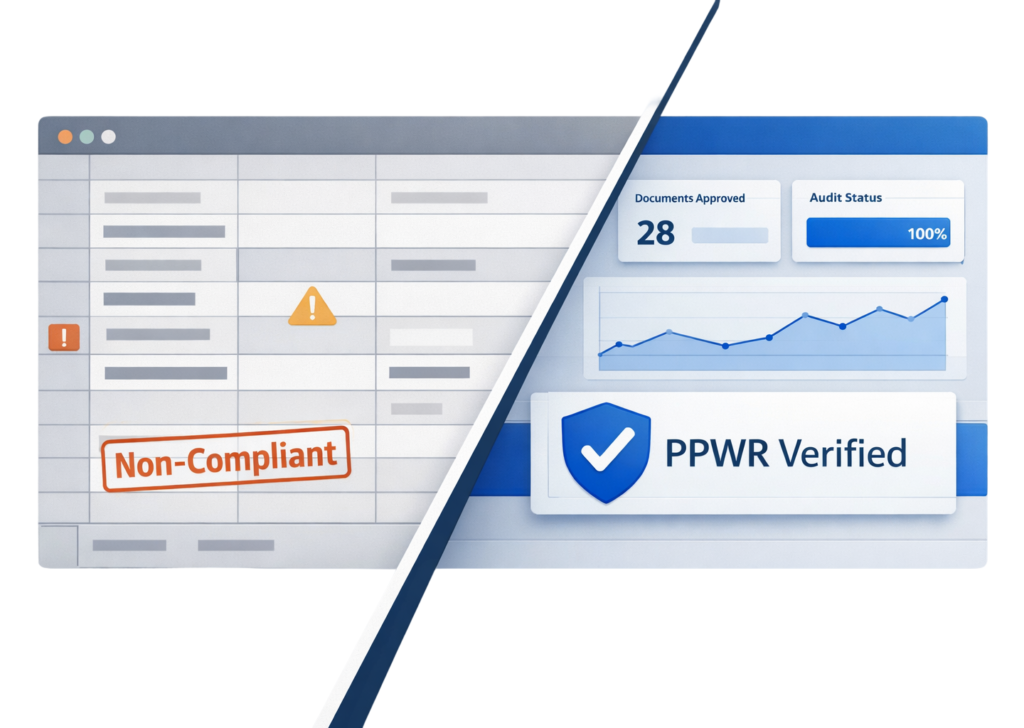
Partly due to different regulatory frameworks that require companies to verify and document their material use, waste recovery, and carbon impact to demonstrate how their operations contribute to a circular, low-waste economy.
And partly because sustainability is actually beneficial to their bottom line. Sustainability regulations such as the EU PPWR, EPR schemes, and the CSRD promote asset reuse, especially secondary packaging assets like pallets and roll cages.
Which in turn reduces returnable assets’ procurement and replacement costs for supply chains. But for on-ground logistics teams, the challenge is the increasing complexity of their own operations.
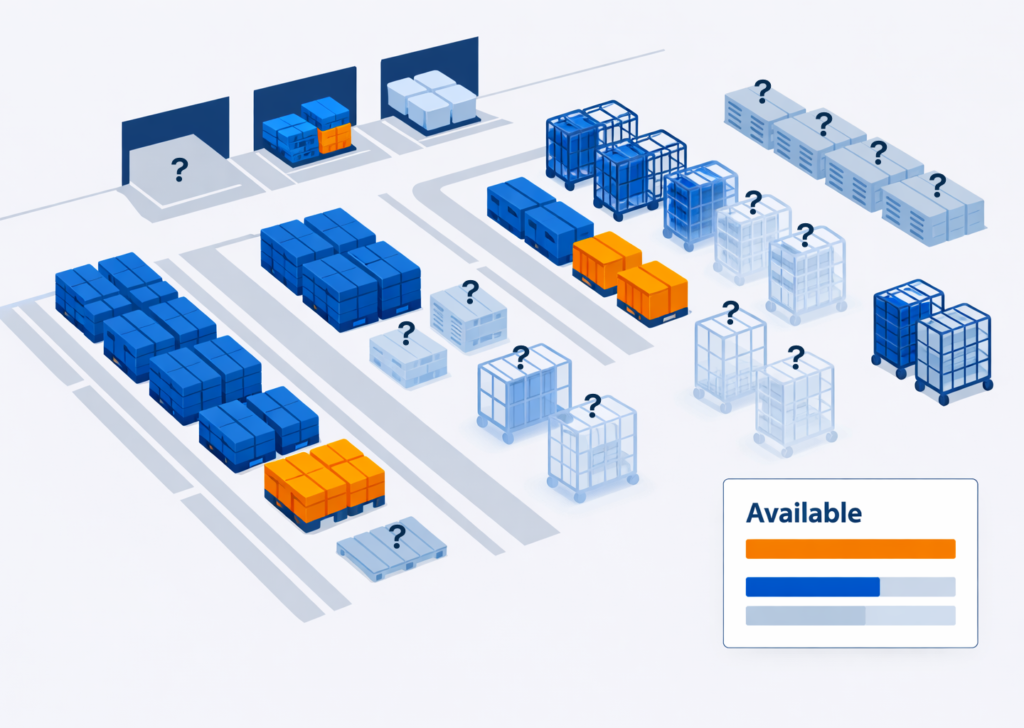
Assets move constantly between warehouses, cross-dock hubs, and partner locations, often without proper traceability; manual processes during handovers not matching digital chain-of-custody records and an expanding black market for stolen reusable carriers are just the most glaring issues plaguing teams.
For instance, a major pooled pallet provider estimated spending US $360 million annually to replace 10% of their fleet that becomes unrecoverable, the majority of it due to theft and customer misplacement.
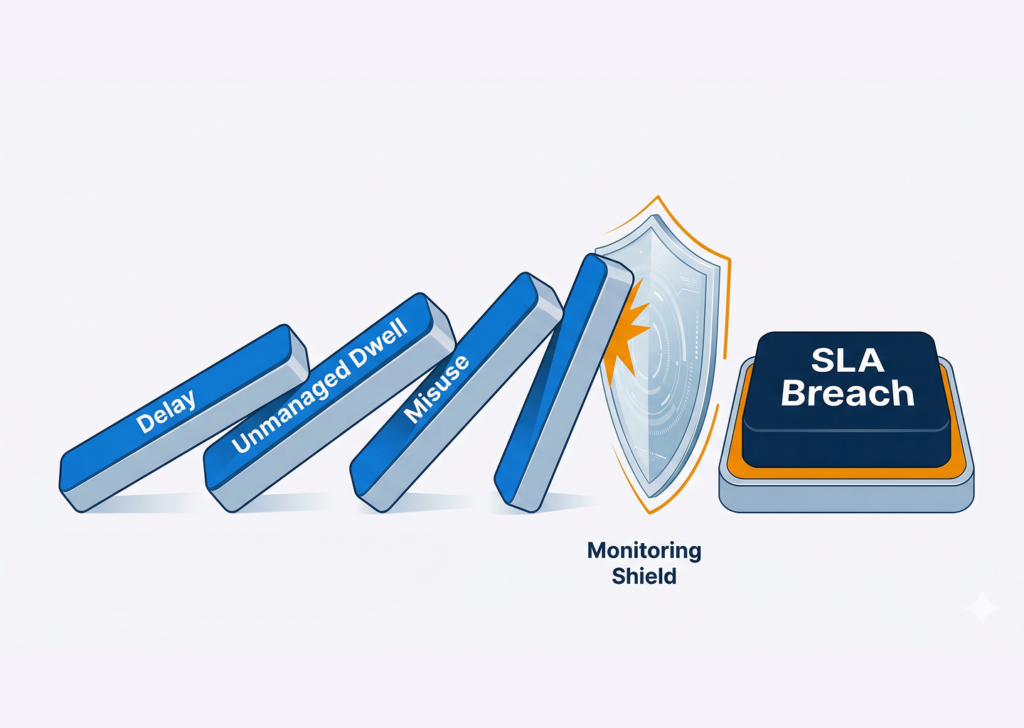
When visibility breaks down, compliance breaks with it. Missing or unverified data leads to incomplete sustainability reports, while unrecovered and underutilized assets translate directly into financial losses. As a result, even well-intentioned sustainability initiatives stall under the weight of fragmented data and disconnected systems.
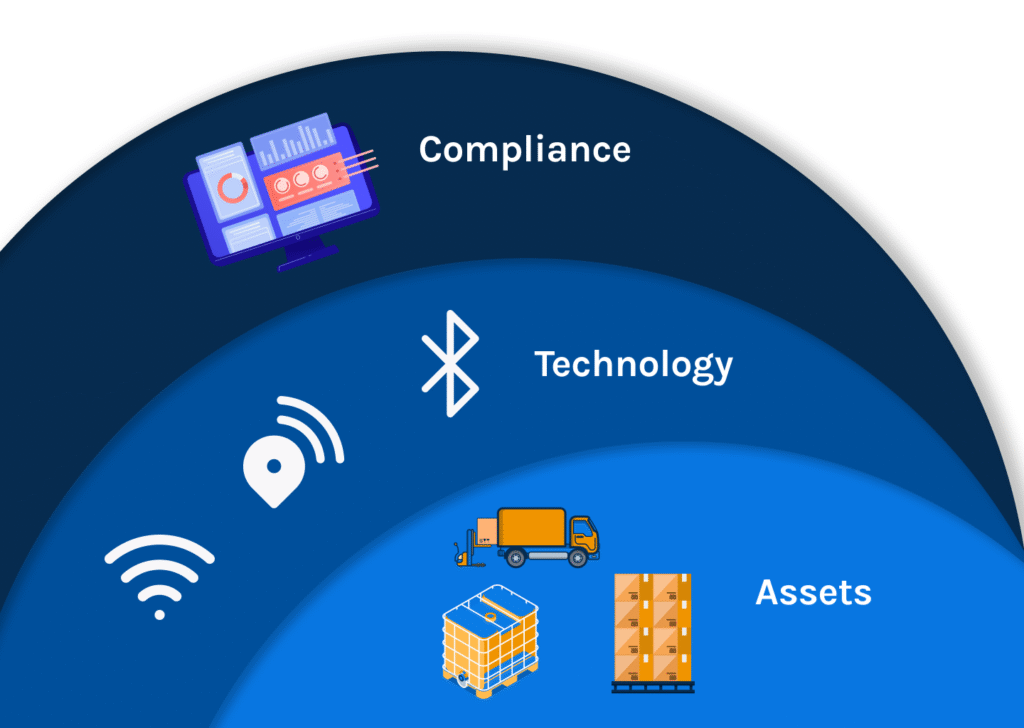
This underscores a hard reality for logistics: assets need to be paired with the right tracking technology, the data from which requires alignment and feeds into the right analytics engine to derive insights that can be acted upon.
And all of this requires deep expertise to configure and implement correctly, a resource most in-house logistics teams lack. This blog explores how to connect assets, data, and analytics into a single source of truth to help logistics teams meet evolving compliance standards, reduce RLC/RTI loss, and turn sustainability reporting into an operational advantage.
Why Technology Choice Can Make or Break Your Logistics Operation
Returnable assets move through multiple operational zones, and each environment presents different visibility challenges. This requires every asset handover, transaction, and return to be measurable, traceable, and auditable. Reports still indicate that reuse penetration will struggle to grow globally unless infrastructure and coordination improve.
Take, for example, a mid-sized logistics business managing 10,000 to 20,000 returnable assets. Without a modular and scalable logistics solution, that business is forced to replace 7 to 10% of its reusable carrier fleet annually. Moreover, if there’s a disconnect between their systems, it makes asset traceability and recovering them that much harder.
Your returnable asset management solution should enable observability, i.e., the ability to understand assets’ condition, location, and usage pattern in real time. The right combination of tracking hardware, analytics engines, and process expertise allows organizations to shift from reactive recovery to proactive management of their reusable carriers.
Tracking Technologies & Use-Case Alignment
Given their fleet’s particular use cases, container/pallet types, or even business model, organizations opt for a suite of tracking technologies, typically covering indoor, outdoor, transit, and return loops.
For instance, RFID/UHF tags work at gate systems and return hubs; BLE beacons and UWB work in yards and warehouses; and GPS/LTE trackers handle long-haul or third-party carrier visibility.
The data from these trackers ensures your returnable assets maintain location and condition visibility throughout their lifecycle. Without this alignment between asset type, movement pattern, and technology, losses rise and reuse rates decline, compromising both compliance and sustainability outcomes.
Integration with Existing Systems
Equally critical is system integration and enabling cross-functionality between the different processes within an operation. When each process operates in isolation, data fragmentation creates blind spots, making it difficult to implement reuse cycles and asset recovery rates.
This is one of the root causes of inconsistent sustainability reporting: partial visibility leads to incomplete compliance records. Returnable asset tracking data must connect seamlessly with existing WMS, TMS, ERP, analytics platforms, and any other processes in the operation.
Preempting Disruptions & Personnel Training
Even with strong technology, results depend on operational readiness and teams on the ground. Partner networks, reverse flows, and return protocols must all align with the knowledge base your teams leverage. Which not only means training personnel on how to parse through the insights being generated by systems but also managing playbooks that help them stay ahead of usage surges or unforeseen disruptions.
These playbooks are based on historical operational data, the tools your teams have access to, and how well they can use them. This makes executing contingency plans in the event of a disruption much simpler and massively improves incident response times.
Closing the Visibility Gap for Returnable Assets with AI
Technology gives you data. Data gives you information. Analytics gives you insight.
Analytics allows logistics teams to turn data into insights that support regulatory reporting and sustainable reuse. This also allows for predictive analysis and the development of the aforementioned playbooks. But recent reports show many logistics players struggling to leverage supply chain analytics: fewer than 25% report high levels of analytics-driven improvement.
This refers back to the issue of having access to the right expertise, helping teams configure their systems to gain complete visibility and understand what to do next. It gives organizations the ability to identify underperforming returnable assets, 3PL performance, damaged vs reusable conditions, idle assets, and much more.
SensaTrak’s asset tracking platform and trackers are built around visibility, accountability, and data-driven reuse. This ensures that returnable assets remain visible across the full operational cycle.
Similarly, the increasing adoption of AI in different verticals within the supply chain sector points to the importance of understanding the data you collect. Teams are moving towards assimilating and grouping data to prevent tool sprawl and alert fatigue. AI/ML is proving to be a major time-saver in this area.
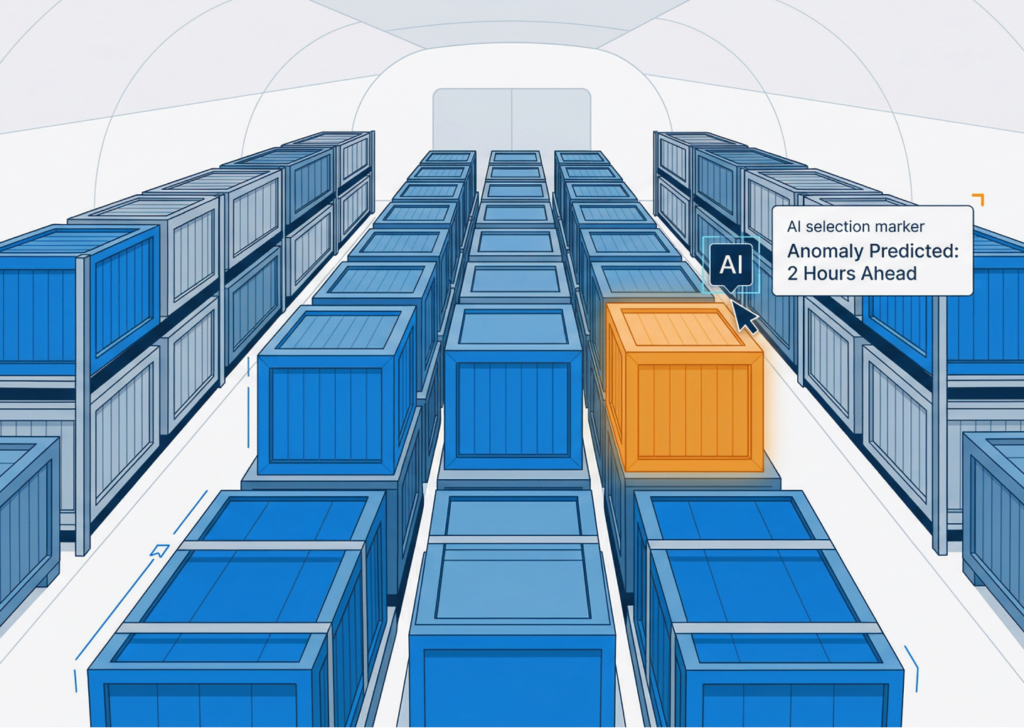
For example, machine learning models trained on asset-movement patterns to detect anomalies enable teams to act before issues escalate into lost assets or compliance violations. AI’s ability to detect these trends and recommend actions is key to minimizing loss, reducing waste, and improving asset performance across the supply chain.
In fact, AI-based predictive maintenance solutions have been shown to reduce maintenance costs, adjust compliance frameworks, report on new metrics, and keep up with the latest ESG standards without the need for constant manual updates. This continuous adaptability ensures that your logistics operation remains future-proof and responsive to evolving regulations.
SensaTrak’s Approach & Advantage
Visibility alone is not enough; selecting the right tracking technology, pairing it with a predictive analytics platform, and having access to the correct expertise are essential if you want your returnable assets management solution to drive compliance and sustainability in logistics.
Our modular approach allows businesses of any size to scale RLC/RTI fleet visibility, prevent returnable asset thefts, optimize asset performance, and demonstrate measurable sustainability without overhauling existing systems.
SensaTrak combines the power of multi-technology tracking, AI-driven analytics, and proactive visibility to help logistics teams meet the ever-increasing demand for regulatory compliance and more sustainability in logistics.