Over the past three months, I’ve had conversations with about 20 3PL and warehouse teams across Europe about their PPWR readiness. The conversations followed a surprisingly consistent pattern.
On one side, there’s genuine urgency. Teams know PPWR is coming. They know August 2026 is the date.
They’ve read the summaries, attended the webinars, and started internal discussions about what needs to change.
The awareness is very real and there is a strong intent to comply with the regulations.
But then, whenever there was a discussion about how they currently manage their returnable asset data, the picture looked very different.
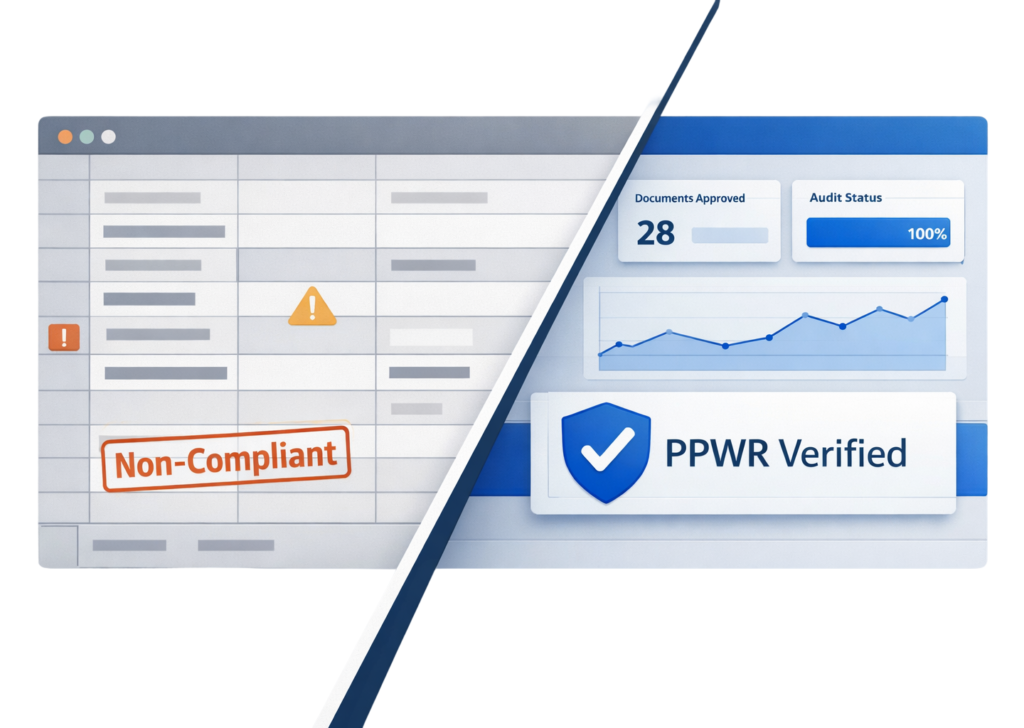
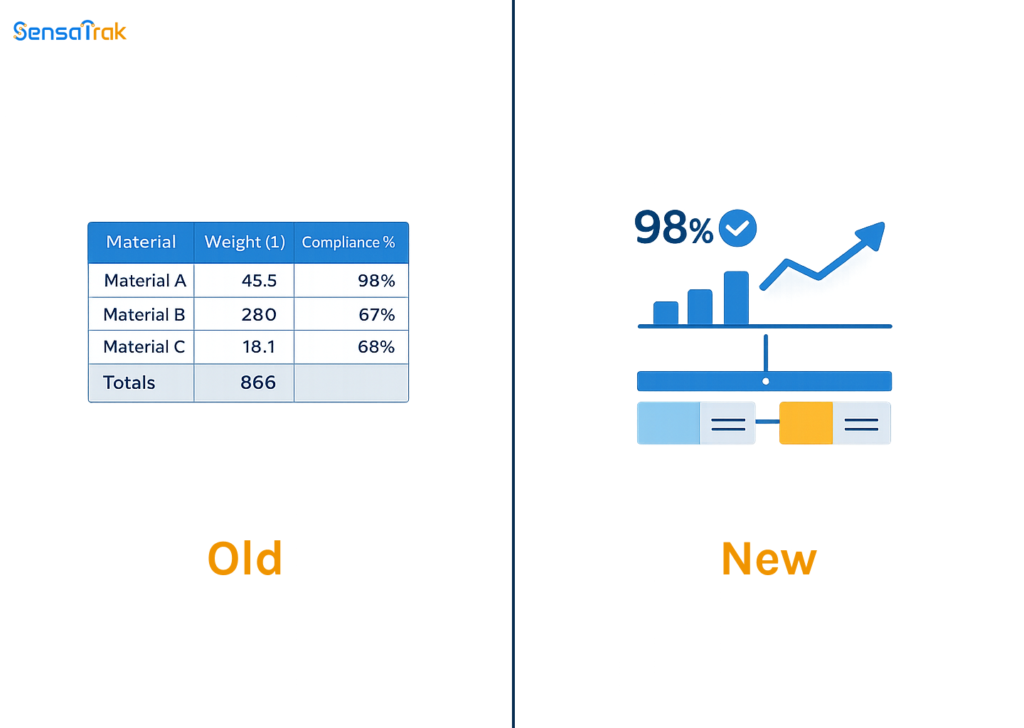
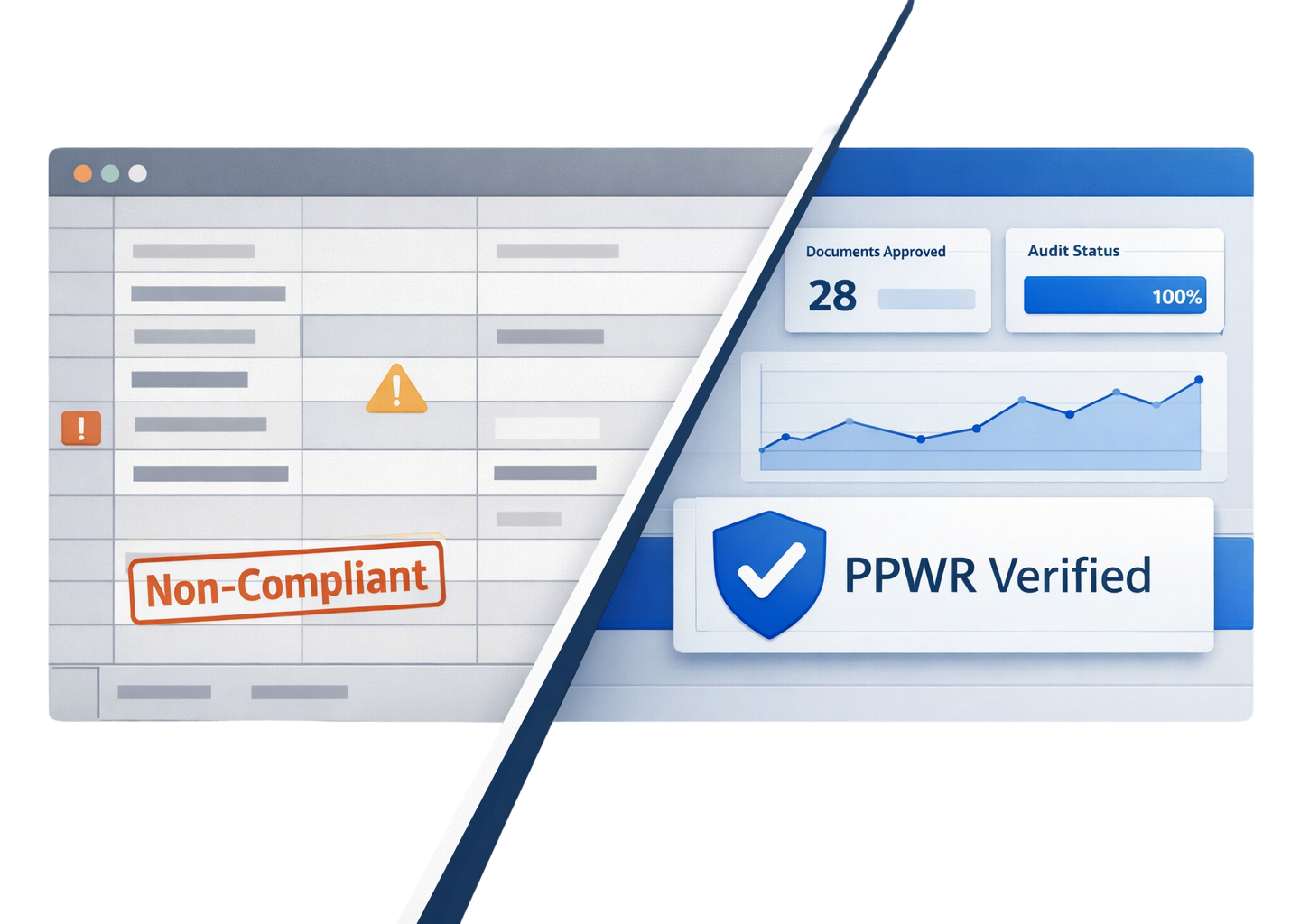
For most of them, it was done with numerous excel sheets maintained by two or three people.
These team members had to reconcile asset counts every month by pulling numbers from partner portals, warehouse logs, and email threads.
The asset reuse data that these teams had were only rough estimates based on procurement cycles. The condition records mostly lived on an unknown computer or a shared drive folder that hasn’t been updated since some quarters.
This disconnect was quite evident and surprising.
These are teams running large-scale operations with thousands of plastic pallets, roll cages, and carriers moving across multiple countries.
They’re spending weeks every quarter assembling data from partner systems that don’t talk to each other, cleaning up duplicate entries, and building reports that they themselves can’t trust too much.
A recent Fraunhofer IML study broadly confirmed what I was seeing in these conversations: almost half of companies overestimate their PPWR preparedness, and only around 10% have actually built the structural foundations needed for compliance.
The gap between feeling ready and being ready is wide.
This blog is about that gap.
I want to walk you through why manual reporting, the way most returnable asset teams handle their data today, won’t stand a chance with what PPWR demands. I’ll also cover what you can start doing about it now, before August 2026 arrives.
What does EU PPWR demand from teams like yours?
Most of the teams I spoke with had a general sense of what PPWR covers. They roughly know that they’d need to track reuse targets, recyclability, and packaging waste reduction. The broad strokes were familiar.
But then I stooped slightly into the details, and the picture got more grim.
The teams were less clear about the reporting specifics. When I walked through what PPWR asks you to submit, and in what form, the reaction was almost always a version of “we aren’t sure if we can do that”
So, here’s the stuff which will catch you off guard the way it did to them.
What does EU PPWR require from returnable assets operators?
PPWR requires you to report annual packaging data in each EU Member State where your packaging circulates.
That data includes weight, material type, and recyclability grade for every category of packaging you place on the market.
For example, if your plastic pallets move through Germany, the Netherlands, and Poland, you need three separate data submissions, each one reflecting what happened in that specific country.
What are the timelines?
By 2029, every reusable packaging item needs to carry a unique digital identifier, a QR code or RFID tag, that links to its return and reuse history.
That means your system needs to record, at the individual asset level, how many times each pallet or roll cage has completed a reuse cycle. And that record needs to be tied to the physical identifier on the asset itself.
By 2027, digital labelling requirements start.
Your packaging needs to link to structured data on material composition, recyclability, and reuse details.
This data needs to be accessible digitally, which means it must live somewhere in your systems in a format that can be retrieved on demand.
And you need to maintain technical documentation on your reusable packaging for 10 years.
That’s a decade of asset-level records covering lifecycle data, conformity assessments, and condition history.
When I shared these specifics with the teams I was speaking to, I could see that they became slightly uncomfortable.
The question now wasn’t that “are we aware of PPWR” but “can their current systems take care of this?”
I could gauge from the reaction that the honest answer was no.
The reporting that PPWR would require are granular, continuous, country-specific, and auditable.
It assumes your returnable asset management systems are capturing data at the individual asset level, segmenting it by geography, and storing it in a structured format that holds up under regulatory scrutiny.
That’s a very different bar from what most manual reporting workflows were built to clear.
Where does manual reporting break down against these requirements?
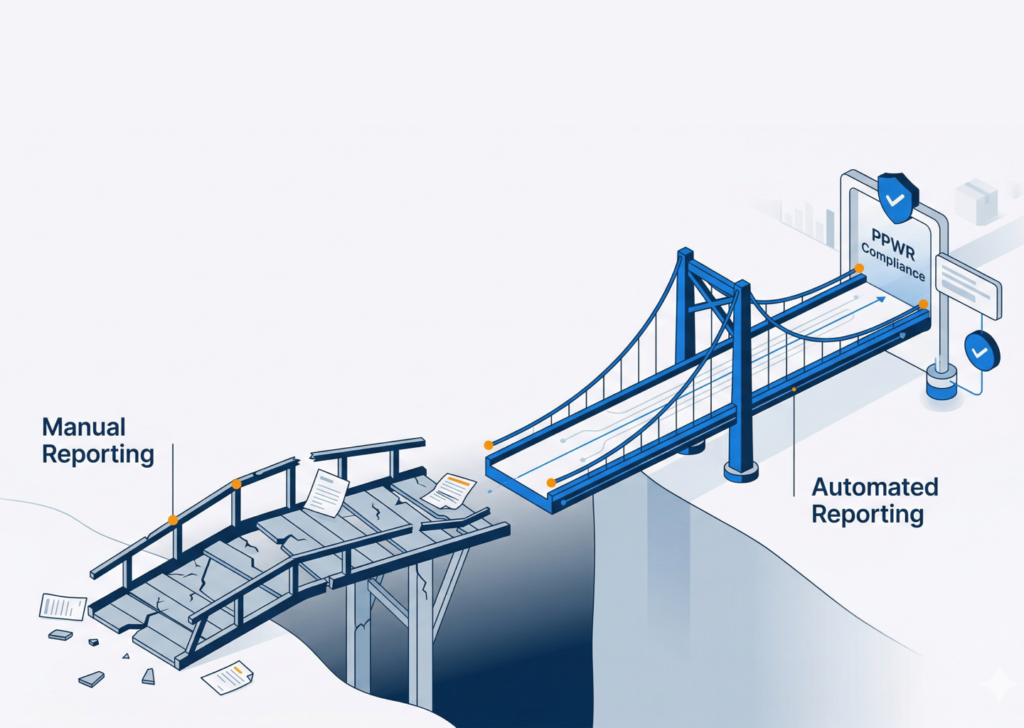
Mapping what these teams were doing on-ground to what compliance looks like under PPWR, gave a good picture of the mismatch.
Most of them were tracking their returnable assets through a combination of spreadsheets, partner-reported numbers, and periodic physical counts.
The people maintaining these sheets were usually one or two team members who had built the tracking logic themselves over the years. They knew the formulas, they knew the partner contacts, and they knew where to look when a number didn’t add up. The entire process lived in their heads as much as it lived in the files.
This is good for a end-of-quarter summary.
But it doesn’t work when a regulator asks for per-asset reuse data, broken down by EU Member State, going back 12 months, in a specific format.
What happens when you try to reconcile data from multiple partners manually?
The most significant challenge across every conversation.
Returnable assets don’t stay within one organization’s systems.
A plastic pallet might be dispatched by one company, handled by a 3PL, stored at a client warehouse, and returned through a different logistics partner.
Each of those parties logs the asset differently, in their own system, with their own identifiers and timestamps.
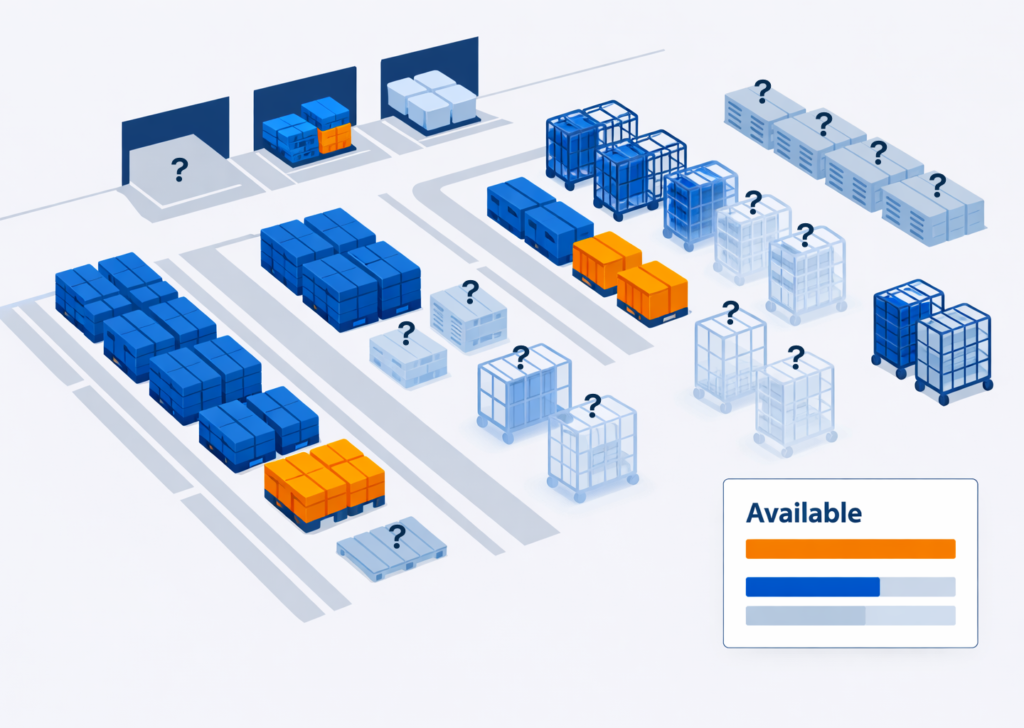
When the team responsible for reporting needs to assemble a reuse count for that pallet, they’re pulling data from four or five sources that were never designed to talk to each other.
The process to reconcile all this data from multiple partners for a single quarter can take weeks.
And still, at the end of it, there are multiple gaps that have to be filled with assumptions.
And this report doesn’t really make a match for PPWR.
Why can’t spreadsheets produce country-level compliance data?
Almost all the teams I talked to, operated across four or five EU countries.
Their assets flow freely across borders, but their spreadsheets aren’t structured to segment the asset data by country.
When a roll cage moves from Belgium to France, the spreadsheet might record that the asset left one location and arrived at another.
What it usually doesn’t record is:
- which country’s PPWR report that movement should count toward,
- how the reuse cycle should be attributed geographically, or
whether the asset’s condition data needs to be reported in the origin country or the destination country.
Most teams I spoke with hadn’t planned this reporting framework yet, and the ones who had, were finding that their existing data structures made it extremely difficult to retrofit.
Why can’t spreadsheets produce country-level compliance data?
PPWR requires technical documentation on reusable packaging to be maintained for 10 years.
It requires per-asset digital identifiers linked to reuse history. It requires conformity assessments and declarations.
And spreadsheets are peculiar that way.
They don’t have version control that satisfies a regulatory audit.
You can’t timestamp entries. You can’t prevent manual overwriting of historical data.
And you can’t link a data entry to a specific physical asset through a digital identifier.
The most common response on how to reconcile reuse history for PPWR was an uncomfortable pause followed by a “we’d have to go back and try to piece it together.”
But that won’t work. The regulation assumes the data exists in a structured, verifiable form at the time of the audit.
If it doesn’t, it’s a clear compliance failure, regardless of whether the assets were actually reused at the required rates.
What can you do if you’re still running on manual reporting today?
One thing is clear – these teams had tremendous and deep awareness and understanding of what’s coming. They’d done their reading. They’d had the internal discussions.
The reason they were still on spreadsheets wasn’t a lack of awareness.
The returnable assets tracking solutions they’d looked at could tell them where assets were. But they couldn’t produce the kind of structured, country-segmented, audit-ready lifecycle data that PPWR is going to demand.
So, they kept doing it manually, because at least that way they had some control over the output. Even if the process was slow and the results were approximate.
If you’re in a similar position, here’s what I’d suggest.
Pick one asset type from your fleet.
Maybe your plastic pallets. Take one quarter of your most recent data and try to produce a PPWR-style report from it.
Per-asset reuse counts, broken down by EU Member State, with material composition and condition documentation attached.
See how long it takes. See where the gaps show up.
That exercise alone will tell you exactly how far your current setup is from what August 2026 requires you to do.
Then look at where your time actually goes during reporting.
In the conversations I had, the biggest time sink was the same thing: reconciling data from multiple partners.
If you can identify which partner data flows are the most manual and the most unreliable, you’ve found the first thing worth fixing.
And then ask yourself whether your current tracking infrastructure can produce what PPWR needs. Because these asset tracking solutions are supposed to solve this for you.
A system that tracks asset locations is useful for daily operations. But sustainability in logistics compliance under PPWR requires something more specific.
It requires a system that records reuse cycles per asset, segments that data by country, maintains it for 10 years, and links it to a digital identifier on the physical asset.
A bit about SensaTrak
We’re helping logistics providers solve the exact same returnable asset management problem at SensaTrak.
Our platform captures lifecycle and reuse data at the individual asset level, processes it through a strong analytics engine to normalize it across partners and countries.
Then it structures it so that it maps directly to what PPWR reporting demands.
Simply – it reduces all the hassles that I heard from the logistics teams.
The data in our reporting is continuous, auditable, and organized by geography from the point of collection.
So, your team wouldn’t have to spend weeks assembling it afterwards because the system produces compliance-ready data by default.
I also understand that moving from manual processes to a platform feels like a big step when your team is already stretched with daily operations.
That’s why we have a pilot program that lets you test this on a portion of your fleet first.
You can see what the data looks like, how it maps to PPWR requirements, and whether it really saves your time and effort.
August 2026 is almost here.
The teams that start putting 2 and 2 together now will walk into enforcement with their reporting already in place.
You wouldn’t want to be caught scrambling for spreadsheets, when the regulator asks for hard evidence?