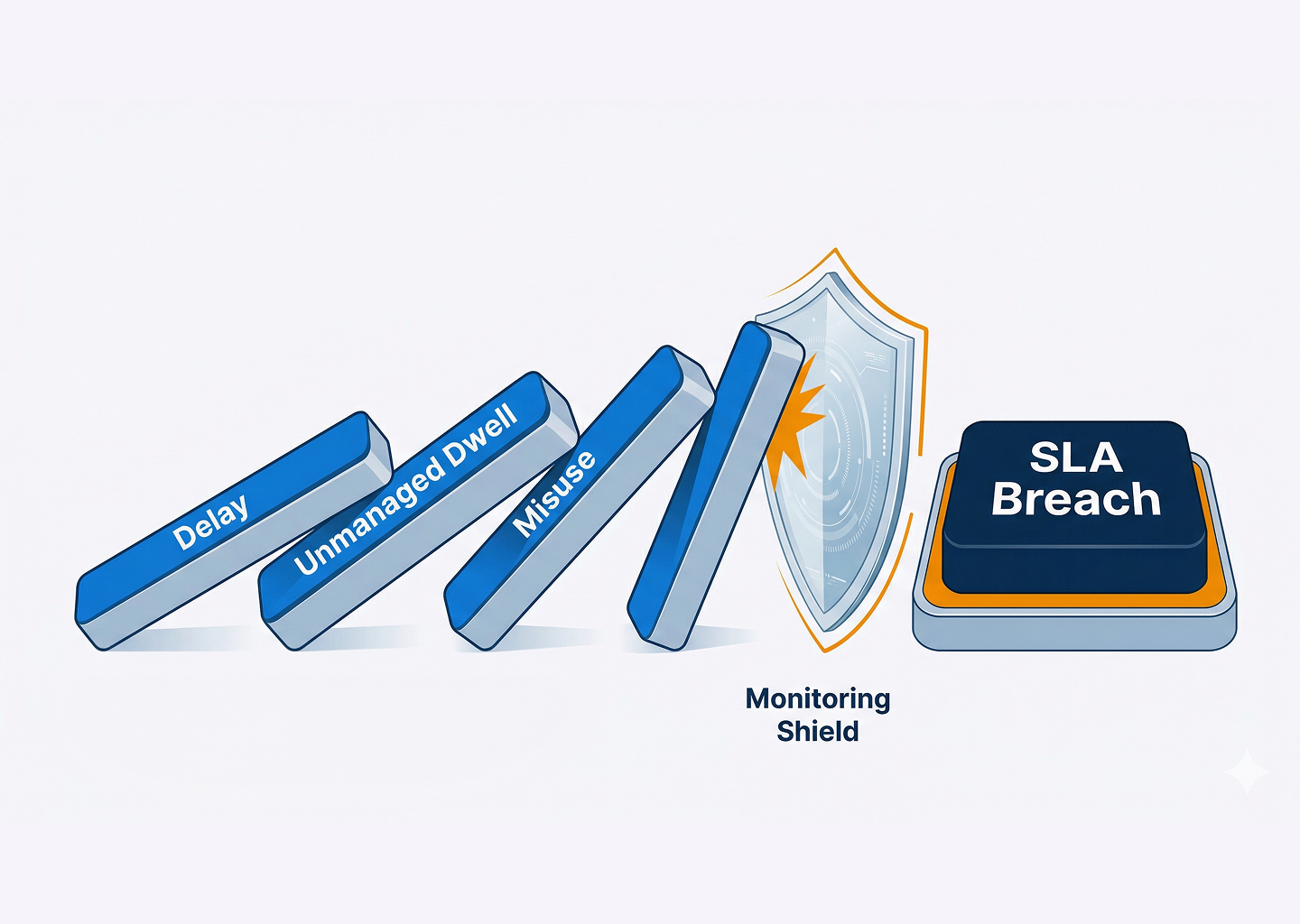
In many logistics environments, SLA escalations are treated as events to be taken care of after they happen.
A customer complains. A delivery window is missed. A shortage appears at a site. A quarter-end reconciliation shows that the asset inventory does not match the system.
By then, the issue has already created enough damage to your operations, slowed down your flow and kept your team hostage to fixing those issues instead of doing productive work.
But operational failure usually starts much earlier.
It starts when returnable assets move through the network without continuous asset monitoring, when exceptions go undetected between scans, and when teams rely on fragmented dashboards or manual asset tracking to understand what happened after the fact.
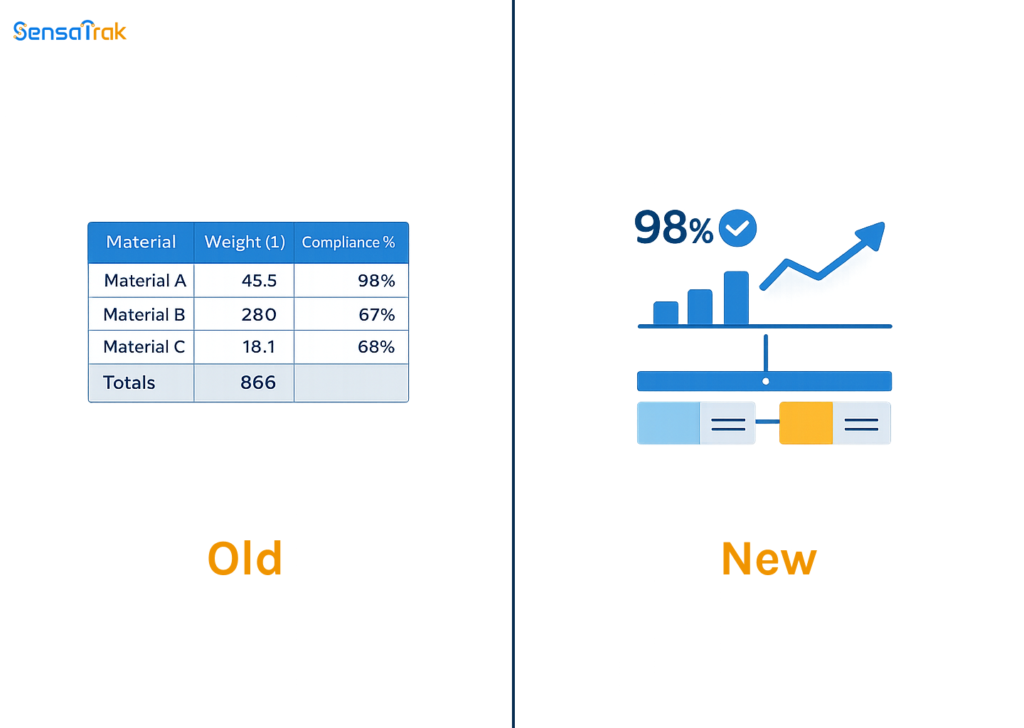
And even though asset tracking solutions are becoming prevalent, most of them still provide descriptive visibility, not real operational intelligence. It means that teams can review what happened but often aren’t informed in time to intervene while the problem is still manageable.
On paper, these tools appear to offer visibility. In practice, the value often shows up only during reporting cycles, inventory reconciliation, or post-event review.
Some programs monitor only a sample of the fleet and project assumptions across the rest.
Others struggle with data gaps because connectivity is inconsistent or the tracking method is poorly suited to the warehouse, transit, or partner environment.
Even when the telemetry is useful, the intelligence frequently sits outside the ERP, WMS, or TMS systems that drive daily decisions, which forces teams to interpret exceptions manually and slows action.
This is where continuous asset monitoring makes a lot of difference. Real-time supply chain visibility is not just about knowing where an asset was last seen.
GS1 frames it as the ability to monitor lifecycle events and make changes at any step in the supply chain, while McKinsey ties connected, real-time visibility to faster reaction and lower operational friction.
Applied to returnable asset monitoring, that means detecting idle time, custody mismatches, delayed returns, route deviations, and emerging shortages early enough to act before the issue turns into an SLA escalation.
This blog will examine why manual asset tracking and fragmented monitoring continue to drive logistics SLA pressure, where conventional asset tracking solutions fall short, and how continuous asset monitoring gives operations teams a better chance to reduce escalations before they reach the customer or the contract.
How does manual asset tracking keep SLA management reactive?
Manual asset tracking tends to create a delayed version of reality.
Teams often rely on scans, spreadsheet updates, hand-written logs, end-of-shift entries, or periodic reconciliation to understand where returnable assets are and whether anything has gone wrong.
That may be enough for basic record-keeping, but it is a weak model for managing a live logistics SLA.
By the time someone notices that assets have not returned, dwell time has stretched too far, or a customer-facing shortage is building, the issue is already old.
The system has captured history, but not predictive power to enable preventive decision making.
And most of the logistics SLA pressures often don’t begin when the breach is reported; it starts earlier, when RTI events, delayed returns, and abnormal circulation patterns are not visible in time to support action.
This is why manual asset tracking keeps operations teams reactive.
It depends on people noticing the exception, logging it correctly, and then passing that information forward fast enough for someone else to act.
In real networks, that breaks down quickly. Because it depends a lot on manual validation and memory.
Assets move through warehouses, yards, partner sites, customer locations, and return loops where updates are inconsistent, and accountability shifts across handoffs.
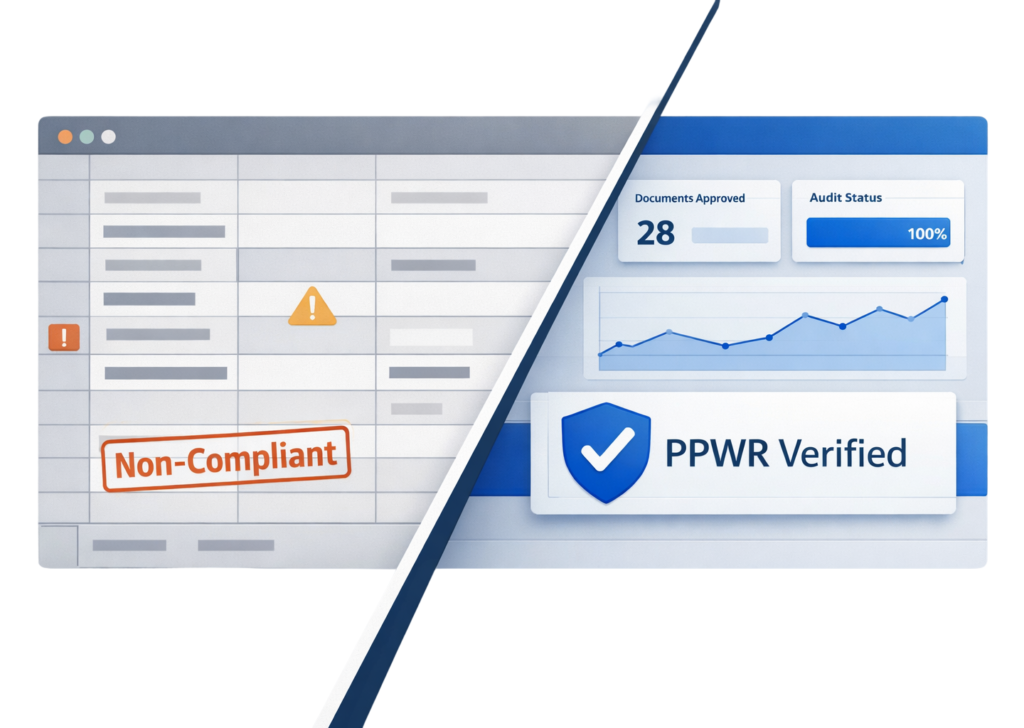
A quarter-end report may explain why the inventory count does not match, but it does not help the team recover the assets that went missing two weeks earlier or prevent the service issue that came from that gap.
The deeper issue is that manual asset tracking does not support continuous decision-making.
GS1 describes real-time supply chain visibility as the ability to monitor lifecycle events and touchpoints across the supply chain, not merely record isolated updates after they have occurred.
This is important because SLA performance depends on timing. If a returnable asset is idle for too long, stuck at the wrong node, or unavailable for the next cycle, the operational impact is visible immediately, but it only catches up later in the data.
Manual asset tracking still has a place in many operations, but it is not enough when the goal is to reduce SLA escalations across a moving returnable asset network.
Yes, it can support reporting. It can support reconciliation.
What it cannot do well is help teams see developing issues across the fleet while there is still time to intervene.
Why do asset tracking solutions still create blind spots?
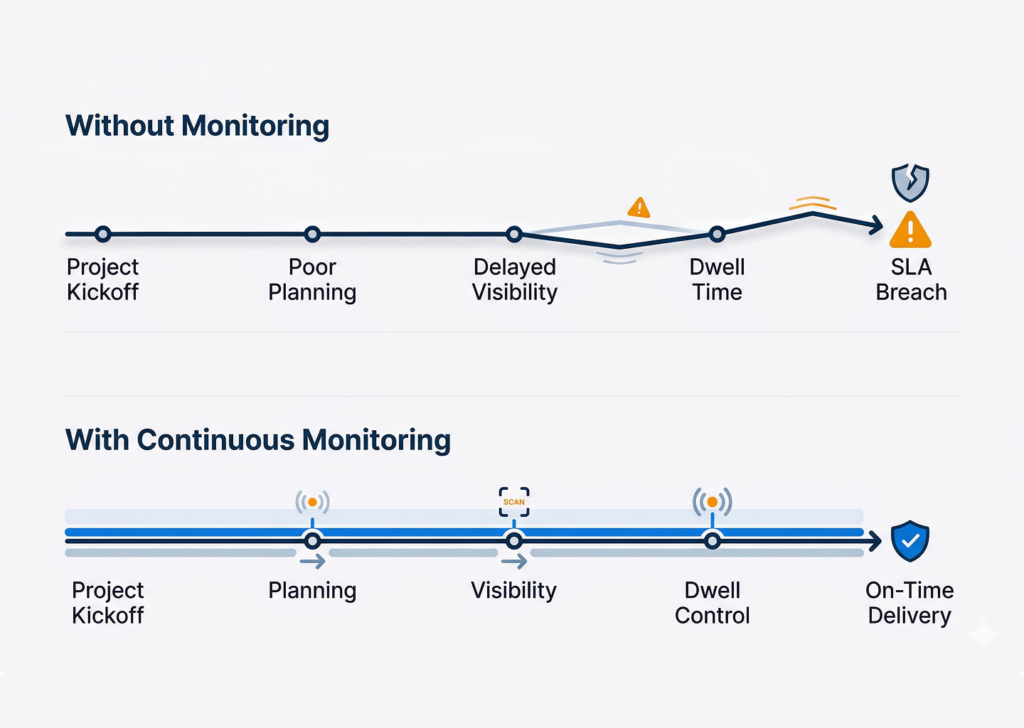
Moving away from manual asset tracking does not automatically solve the problem. Many asset tracking solutions still leave operations teams with blind spots that matter when logistics SLA performance is on the line.
The issue is not that the platforms lack dashboards or analytics.
The issue is that the monitoring model is often incomplete. Some programs track only a sample of the fleet and project conclusions across the rest of the network.
That may be enough for trend reporting or pilot-stage analysis, but it is far less reliable when teams need asset-level visibility across live circulation, return cycles, and site-level availability.
Another blind spot appears when data capture is inconsistent. In many operations, trackers lose value not because the concept is wrong, but because the technology stack is poorly matched to the environment.
Connectivity can drop across warehouse interiors, yard zones, cross-border routes, or partner facilities.
Battery performance can fall short under real reporting frequency and real operating conditions.
Some trackers are designed around simple GPS logic, even though reuse-heavy asset networks need more than geographic pings to support decisions.
Effective returnable asset monitoring requires unified connectivity across LTE, BLE, and RFID, along with signals such as dwell behavior, custody transitions, and condition events.
Without that, data gaps start accumulating, and the dashboard becomes an incomplete representation of the operating reality.
The third blind spot is integration. Even when the tracking layer generates useful signals, many asset tracking solutions fail to connect those signals to the ERP, WMS, or TMS environments where day-to-day decisions actually happen.
That leaves operations teams switching between systems, interpreting exceptions manually, and trying to translate asset data into actions after the delay has already begun to affect service.
GS1’s supply chain visibility framing reinforces the same idea from a broader angle: visibility becomes operationally useful when teams can monitor lifecycle events and respond across the supply chain, not simply review them after the fact.
This is why asset tracking solutions can still create blind spots even when they appear sophisticated on paper.
A dashboard may look complete while the monitoring is sampled, the connectivity is patchy, the hardware is misaligned with the operating environment, or the data is disconnected from the systems that drive decisions.
At that point, teams are working with partial signals and delayed interpretation. And that is exactly where logistics SLA pressure keeps building unnoticed.
How does continuous asset monitoring reduce logistics SLA escalations?
Continuous asset monitoring impacts your operations at the deepest levels. You aren’t just managing assets anymore, you’re building a smart and proactive system with the assets at the heart of it.
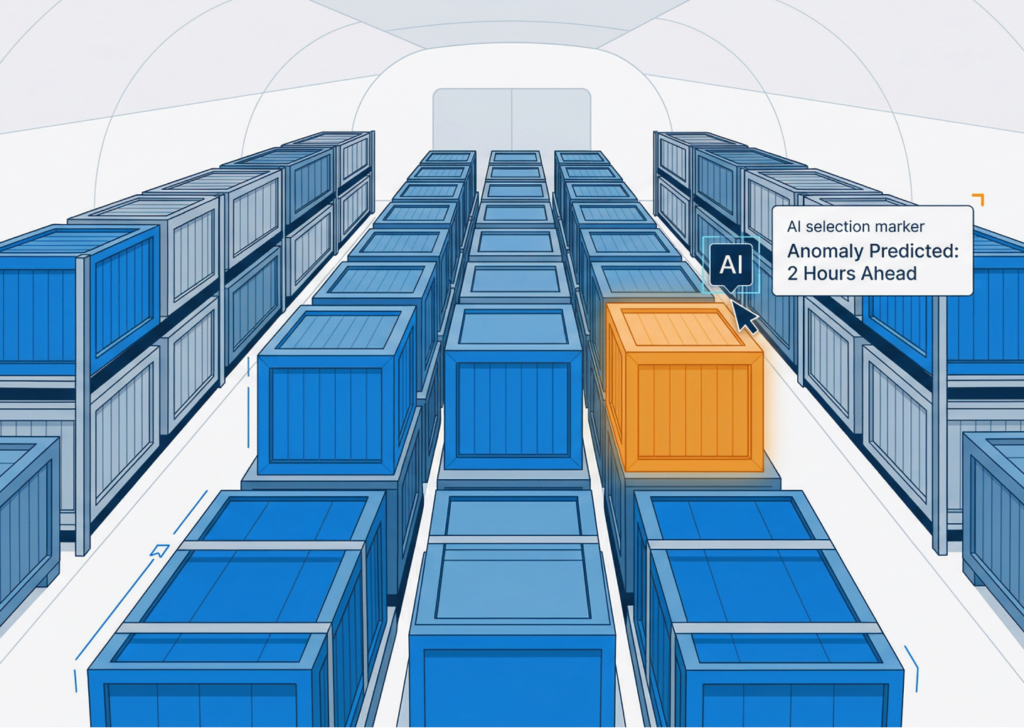
Instead of relying on periodic scans, sampled updates, or dashboard reviews after the fact, teams get a live stream of asset-level signals across movement, dwell, handoffs, and return cycles.
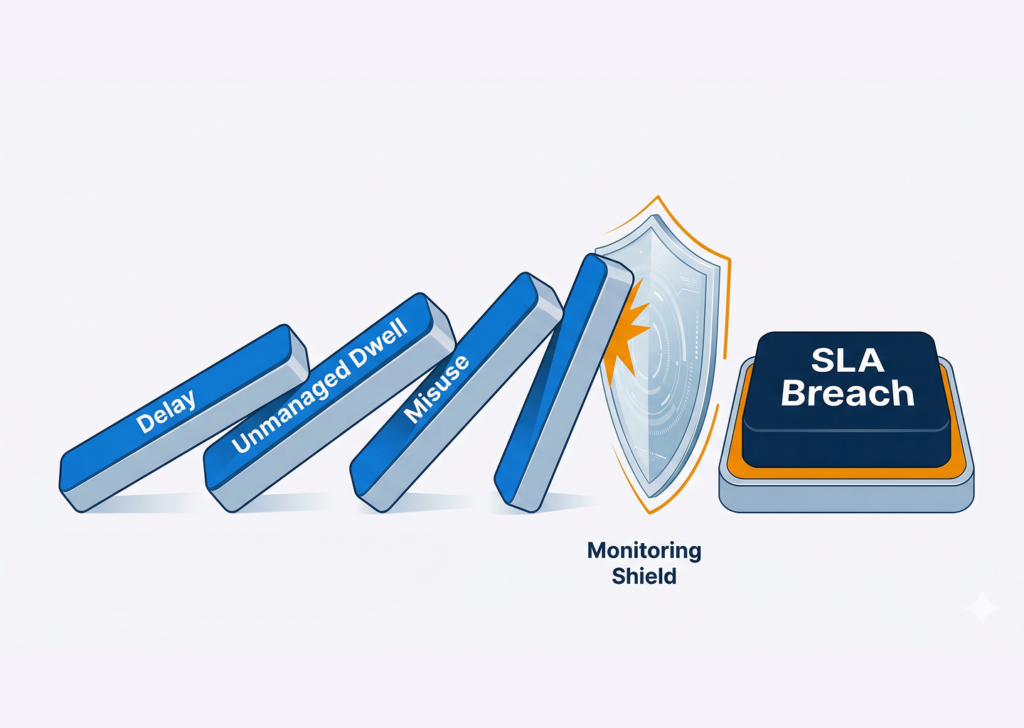
That matters because logistics SLA problems usually build gradually before they become visible enough to escalate.
A delayed return loop, an asset stuck too long at a partner site, a custody mismatch between facilities, or a growing shortage at a high-priority location doesn’t come up as an escalation.
But these are all indicators and could signal a pattern.
Continuous asset monitoring helps pick up these patterns earlier, while the operations team still has room to act. This helps close the gap between visibility and operational control.
You control how assets move. Instead of just being an observer and taking actions post facto, your decision making becomes much more informed and proactive.
In a returnable asset environment, teams should be able to detect hidden dwell accumulation, route slowdowns, unexpected idle time, and local asset shortages before those issues affect dispatches, customer commitments, or service windows.
Continuous monitoring also makes SLA management less dependent on assumptions.
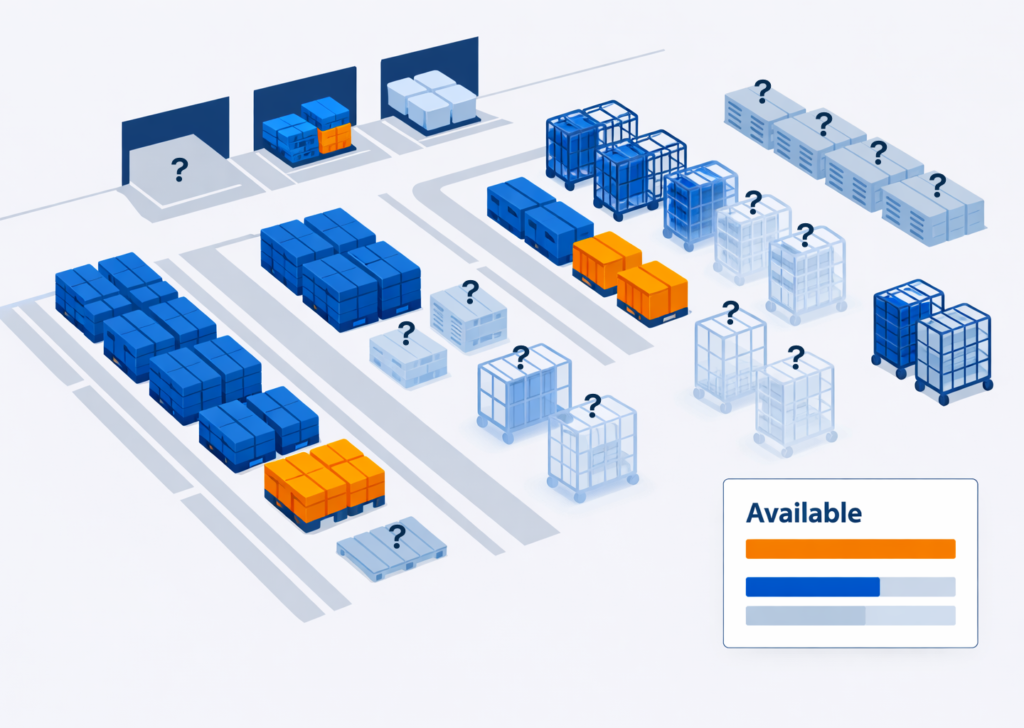
When a fleet is only partially visible, teams are forced to estimate availability, infer return patterns, and project risk from incomplete signals.
These data points may be acceptable for reporting purpose. But these are much weaker for protecting day-to-day service performance.
With continuous asset monitoring, returnable assets are treated as moving operational entities rather than static inventory counts.
That gives teams a better view of which assets are actually available, which ones are delayed, which ones are drifting outside expected circulation patterns, and where recovery or reallocation decisions need to happen first.
How SensaTrak supports returnable asset monitoring with continuous operational visibility?
SensaTrak’s position in this conversation is not just that it tracks assets.
It is that we treat returnable assets monitoring and reporting as an operational visibility problem.
That is why our platform is framed around continuous data capture, asset-level movement intelligence, and integration into ERP, WMS, and TMS environments instead of a standalone dashboard that sits outside daily decision-making.
The goal is not merely to show where assets are. The goal is to connect asset signals to planning, dispatch, recovery, and SLA-sensitive workflows while those workflows are still in motion.
An asset tracking system becomes useful when visibility feeds action instead of sitting in a separate interface waiting for someone to reconcile it later.
This is also why we keep stressing that RTI visibility affects logistics SLA performance directly.
When assets are delayed, unavailable, or circulating outside expected patterns, the service consequence appears quickly in missed turns, slow recoveries, and customer-facing escalation pressure.
A monitoring model that captures those signals continuously gives teams a better chance to prevent that chain from progressing.
Practically, we support a better operating model by reducing the structural weak points discussed earlier in the blog.
We move the team away from manual asset tracking, away from sampled assumptions, and away from siloed visibility that never reaches the systems where decisions are made.
We don’t just do better dashboards and fancy reporting, we make sure your operations feel the real value by getting full control your asset movement.
That is the real power of continuous asset monitoring and that’s what we deliver.