I’ve had enough conversations with operations and compliance teams across European logistics to notice a pattern.
Almost everyone knows that sustainability regulations are tightening. EU PPWR is coming into force. EPR obligations are expanding. Cold chain standards are getting stricter. The general awareness is there.
What’s usually missing is the specific understanding of what these regulations actually require from your data infrastructure.
And I mean specifically from your returnable assets, the plastic pallets, roll cages, and specialized carriers that your teams move across warehouses, transit legs, and client sites every day.
The regulations themselves are written in legal language that’s easy to skim and hard to operationalize.
A line like “reusable packaging must include a unique identifier for tracking return cycles by 2029” sounds straightforward until you sit down with your tracking team and ask them whether your current system can actually produce that data at the asset level, across every country you operate in, in a format that would survive an audit.
I’ve seen this gap occurring for many teams who thought they had no compliance problems.
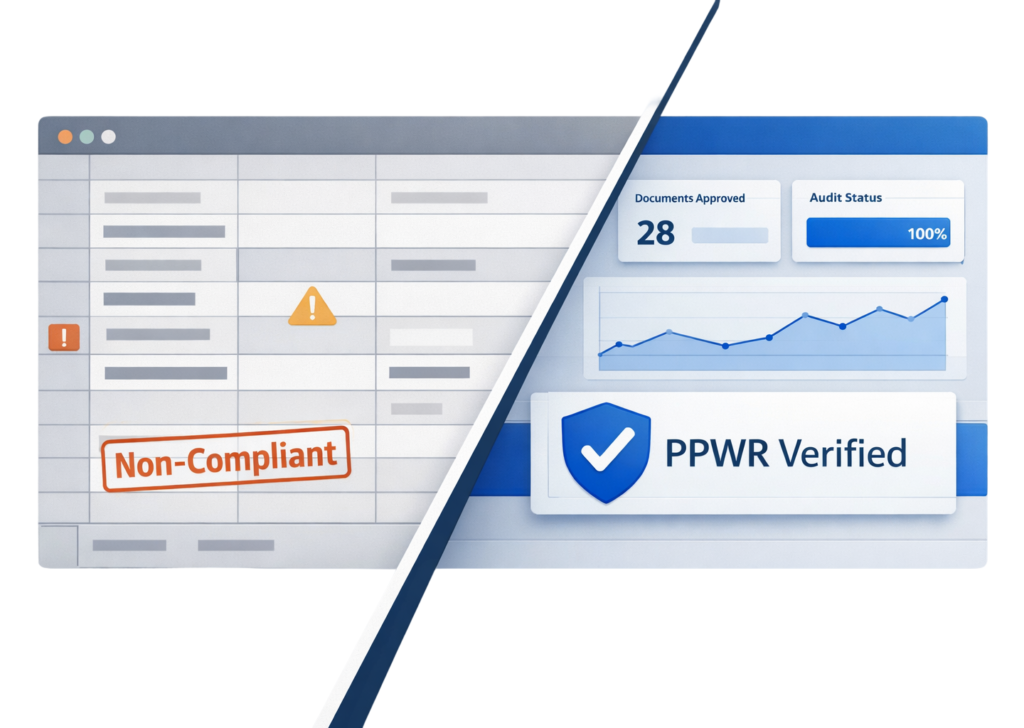
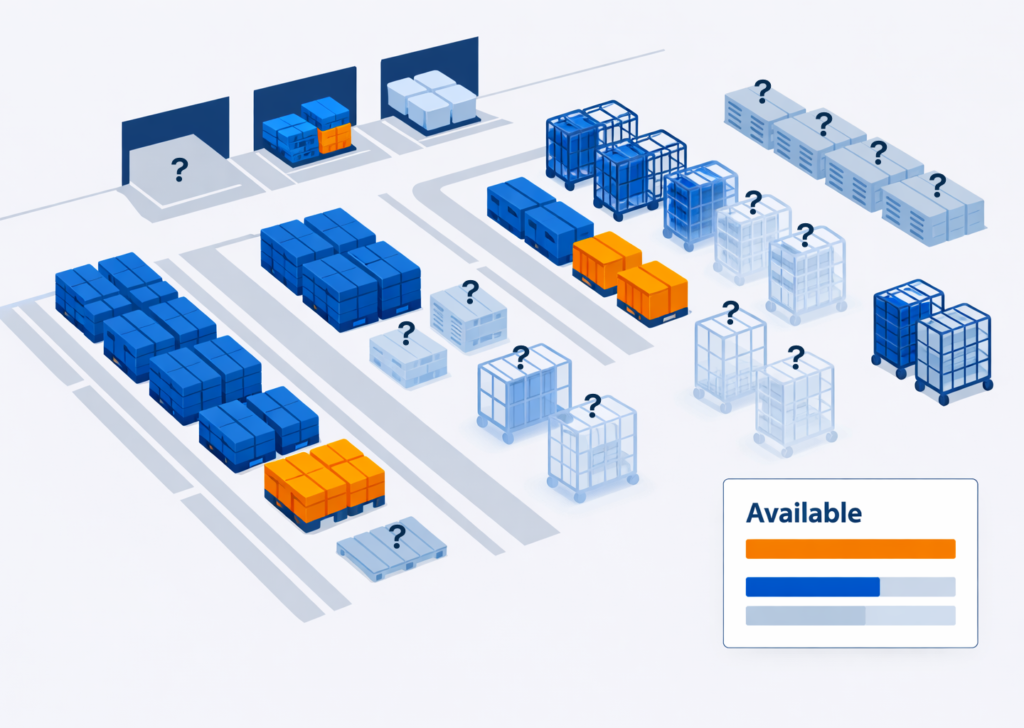
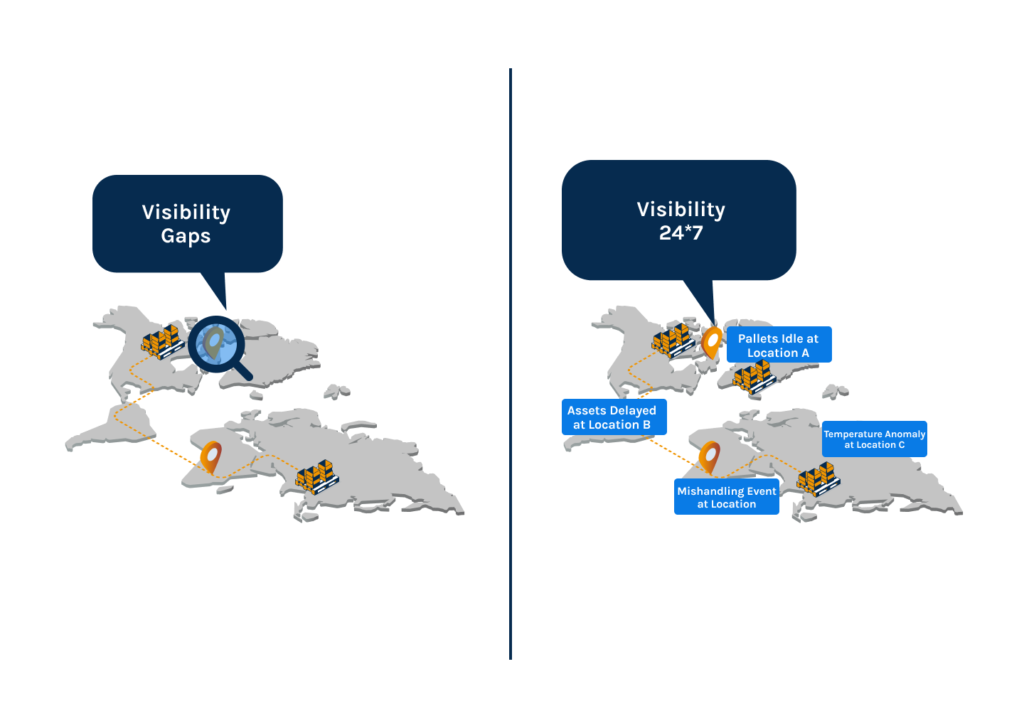
Teams that have invested in tracking technology, that have dashboards running and devices on their fleet, but when you ask them to produce a verifiable reuse rate for a specific pallet type over the last 12 months, the data either doesn’t exist in that form or requires weeks of manual reconciliation to assemble.
That gap between having tracking in place and having compliance-ready data is where most logistics operations are right now.
And with PPWR applying from August 2026, it’s a gap that’s going to become very visible very quickly.
This blog walks through four regulatory frameworks that are reshaping what data returnable asset operators need to capture: PPWR, EPR, EN 12830, and GDP.
For each one, I’ll cover what the regulation asks you to prove, what data your assets need to generate to satisfy that, and where I see most tracking setups falling short.
What are the European sustainability regulations affecting returnable assets?
Before getting into what these regulations require from your data infrastructure, it helps to have a clear picture of what each one actually is.
I’m covering four frameworks here because they’re the ones I see creating the most immediate pressure on teams managing returnable assets across European logistics.
What is EU PPWR?
The Packaging and Packaging Waste Regulation (EU Regulation 2025/40) is the EU’s new packaging law, replacing the older Packaging and Packaging Waste Directive. It entered into force in February 2025 and applies from August 12, 2026.
Unlike the previous directive, PPWR is a regulation, which means it applies directly across all EU Member States without needing national transposition.
Every company placing packaging on the EU market, including transport packaging like plastic pallets, roll cages, and specialized carriers, falls within its scope.
The headline numbers for returnable asset operators: by 2030, 40% of transport packaging used within the EU must be reusable within a reuse system. By 2040, that rises to 70%.
For packaging used in internal logistics, the 2030 target is 100%. Digital labelling requirements begin in 2027, and by 2029, every reusable packaging item needs a unique identifier for tracking return and reuse cycles.
What is EPR in the context of returnable assets?
Extended Producer Responsibility is a policy framework that makes the company placing packaging on the EU market financially responsible for that packaging through its entire lifecycle, including end-of-life management.
EPR has existed in various forms across EU countries for years, but PPWR expands and standardizes it.
Under the new regulation, producers must register in each EU Member State where their packaging circulates, contribute financially to collection, sorting, and recycling infrastructure, and report annual packaging data including weight, material type, and recyclability grade per country.
By 2029, national packaging databases like Germany’s LUCID will be replaced by a single EU-level registry.
For returnable asset operators, EPR means you need country-level data on how your assets are distributed, how they’re performing, and what happens to them at end of life.
What is EN 12830?
EN 12830 is a European standard that defines the technical and functional requirements for temperature recorders used in transporting, storing, and distributing temperature-sensitive goods. It covers a range from -80°C to +85°C and applies to any business handling chilled, frozen, or perishable products across the cold chain.
Since January 2006, all measuring instruments used to monitor cold chain temperatures in the EU must comply with EN 12830. The standard requires accuracy within 0.5°C, secure and tamper-proof data storage, and the ability to maintain extensive historical records.
A companion standard, EN 13486, requires periodic calibration of temperature sensors, typically on an annual basis.
For logistics teams using returnable carriers like insulated containers or temperature-controlled roll cages in food distribution or pharma, EN 12830 compliance means your tracking hardware needs to capture, store, and make available continuous temperature data that would hold up under audit.
What is GDP?
Good Distribution Practice is the EU’s set of guidelines (2013/C 343/01) for the distribution of medicinal products.
GDP applies to every company involved in storing, transporting, or distributing pharmaceuticals across the EU, including manufacturers, wholesalers, logistics providers, and their subcontractors.
GDP requires temperature mapping of storage and transport environments before use, continuous monitoring during transit, complete traceability of every batch from production to end customer, and documented investigation of any deviations.
Digital records must satisfy data integrity requirements under Annex 11 and 21 CFR Part 11, meaning your monitoring data needs to be attributable, legible, contemporaneous, original, and accurate.
For logistics operators handling pharma products in returnable carriers, GDP compliance means your tracking system needs to produce an unbroken chain of evidence showing that the asset, and whatever it carried, remained within required conditions at every point in its journey.
What data do these regulations require from your returnable assets?

Here is my attempt to translate each one of these regulations into the specific data your systems need to produce if you’re managing plastic pallets, roll cages, or specialized carriers across European operations.
What data does EU PPWR require from your returnable assets?
PPWR’s reuse targets
- 40% of transport packaging reusable by 2030.
- 70% by 2040.
- 100% for internal logistics by 2030.
But proving you’re meeting those targets requires a level of asset-level data granularity that most tracking setups weren’t designed to produce.
You need these to prove compliance:
- Verifiable reuse count per asset
You need to know how many times each individual asset has completed a return loop, and you need that data to be auditable.
A fleet-level average or an estimate won’t hold up as evidence during an audit.
- Lifecycle documentation per asset type
By 2027, your packaging needs to carry digital labels linking to structured data on material composition, recyclability, and reuse information.
By 2029, each reusable packaging item needs a unique identifier that enables tracking of its return and reuse history
- Country-level reporting
PPWR requires annual packaging data submission per EU Member State where your assets circulate.
What data does EPR require from your returnable assets?
EPR under PPWR shifts financial responsibility for packaging onto the company that places it on the EU market.
Now, as returnable assets operators, you’re accountable for reporting what your packaging is, where it circulates, and what happens to it across its lifecycle, in every EU country where it’s used.
These are the requirements under the EPR:
- Registration and identification per Member State.
You need to register as a producer in each country where your packaging enters the market.
If your plastic pallets or any other assets move through six EU countries, you need six registrations with country-specific and asset specific data behind each one.
- Annual reporting on packaging volumes and recyclability.
Each Member State will require you to submit data on the total weight of packaging placed on the market, broken down by material type and recyclability grade.
Assets that have been written off, damaged beyond repair, or lost need to be accounted for separately because they affect your recyclability and reuse metrics.
- Financial contribution data
EPR fees are calculated based on the volume and type of packaging you place on the market in each country. Countries with higher recycling infrastructure costs may charge more.
Your tracking system needs to give you a reliable country-by-country breakdown of active assets to keep these contributions accurate.
What makes EPR particularly demanding for returnable asset operators is that your packaging doesn’t stay in one country.
Your EPR reporting needs to account for where the asset was placed on the market, where it currently is, and what country gets credited when it completes a reuse cycle.
What data does EN 12830 require from your returnable assets?
EN 12830 is the most technically specific of the four frameworks.
It asks whether your temperature monitoring hardware meets a defined set of accuracy, storage, and integrity standards, and whether you can prove it.
These are the requirements under EN 12830:
- Measurement accuracy
Your temperature recorders must be accurate to within 0.5°C across the monitoring range.
This means the sensors on your assets need to meet this threshold consistently, and you need calibration records to prove it.
Under the companion standard EN 13486, those sensors need periodic verification, typically annually, conducted by an accredited laboratory.
- Data storage and integrity
Your recorders need to store enough historical temperature readings to cover the full duration of transport and storage.
The data needs to be secure, tamper-proof, and accessible for audit purposes.
- Continuous recording
EN 12830 requires that temperature be recorded throughout the transport and storage process.
Gaps in the recording, whether caused by battery failure, connectivity loss, or a tracker going offline during a border crossing can create issues.
What data does GDP require from your returnable assets?
GDP is the most demanding of the four frameworks in terms of documentation and traceability.
It was built for pharmaceutical logistics, where a single temperature excursion or undocumented handling event can compromise an entire shipment of medicines.
These are the requirements under GDP:
- Environmental monitoring with full traceability
GDP requires continuous temperature monitoring during transport and storage, with every reading linked to a specific shipment, batch, and location.
If a returnable carrier transported a pharma shipment from a warehouse in Belgium to a distribution center in Austria, your system needs to produce an unbroken temperature record for that entire trip, tied to the specific carrier and the specific batch it carried.
- Deviation management and documentation
When conditions fall outside acceptable ranges, GDP requires a documented investigation.
Your system needs to detect excursions in real time, alert the relevant team, and create an auditable record of what happened, when it happened, what action was taken, and who was responsible.
- Data integrity under Annex 11 and 21 CFR Part 11
Digital records in GDP-regulated environments must satisfy the ALCOA principles: attributable, legible, contemporaneous, original, and accurate.
This means every data point your tracking system generates needs to be traceable to its source, timestamped at the moment of capture, stored in its original form, and protected against unauthorized modification.
What I’ve observed across pharma logistics operations is that many teams have the monitoring hardware in place.
The gap is usually in how the data flows from the tracker to the platform to the compliance report.
What to do if you’re preparing for this now?
If I had to give one piece of advice to an operations or compliance lead reading this, it would be this: audit what your current tracking system can produce today against what these regulations will ask for in 12 to 18 months.
Most teams I’ve spoken with have some form of tracking running.
The hardware is deployed, the dashboard shows asset locations, and there’s a general sense that visibility is in place.
But when you sit down and ask whether the system can produce a verifiable per-asset reuse count broken down by EU Member State, or an unbroken EN 12830-compliant temperature record linked to a specific carrier and shipment from four months ago, the answer is usually no.
Manually assembling compliance data works when you have a small fleet in one country.
But it falls apart when you’re managing thousands of returnable assets different countries.
This is why we built SensaTrak.
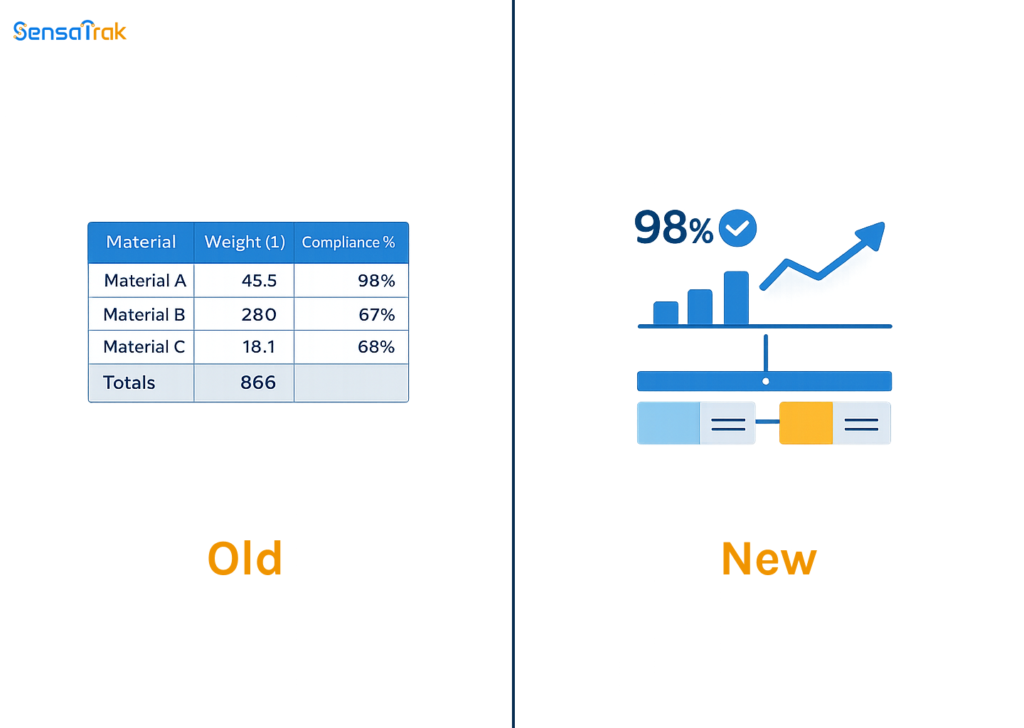
Our platform captures reuse cycles, condition data, and environmental monitoring at the individual asset level and indexes it across countries and journeys.
Then it feeds it into your existing systems in a structure that maps to what PPWR, EPR, EN 12830, and GDP actually require.
If you’re starting to think about this seriously, I’d suggest beginning with the regulation that hits first.
PPWR applies from August 2026. That’s your most immediate deadline.
Map your current data capabilities against what PPWR requires, identify where the gaps are, and work backwards from there.
The other frameworks will follow a similar pattern, and the data infrastructure you build for PPWR compliance will carry over into EPR reporting, cold chain documentation, and GDP audit readiness.
The regulations aren’t going to wait for your systems to catch up.
The sooner your tracking infrastructure is producing compliance-ready data by default, the less time your team spends assembling it after the fact.