In 3PL logistics, the only thing that matters is the speed and the cost of delivery. For your asset tracking solutions, the most important part is to keep up with your speed and cost.
So, what operational factors enable your asset tracking solutions to perform better?
If you’re into 3PL and warehouse operations, you’d have surely heard or dealt with returnable asset tracking solutions. And you’d also know how ubiquitous the use of asset trackers is.
They are embedded into daily throughput. Plastic pallets, RLC trackers, and specialized carrier units move continuously across lanes, yards, cold storage facilities, and subcontracted networks.
So, it’s obvious that asset visibility must keep pace with that movement.
Most asset tracking solutions highlight battery life, GPS accuracy, and dashboard features. On paper, three-to-five-year battery claims and real-time tracking sound operationally safe.
In practice, these claims are tested in extreme conditions.
The warehouse and in-transit conditions rarely resemble controlled environments.
Sub-zero temperatures in multiple regions across Europe & other continents, high-frequency pings, vibration during transport, signal obstruction from stacked metal racks, and cross-border LTE transitions all influence performance.
When battery life degrades faster than expected or connectivity drops intermittently, the result is not just a missing data point. It directly impacts your operations once asset tracker are fully embedded in your workflows.
An asset disappears from the dashboard. A specialized carrier fails to report during peak movement hours. Operations teams must determine whether the issue is physical loss, custody delay, or tracker downtime.
Battery life and data gaps are rarely treated as primary evaluation criteria during procurement. Yet for high frequency 3PL environments, these variables could as much become a cause of disruption as a partner withholding assets.
Before deploying or renewing returnable asset tracking solutions, operations leaders should evaluate more than technical specifications. They should assess how the system performs under real warehouse stress, how it handles offline conditions, and how it preserves data continuity when connectivity fluctuates.
The following checklist outlines the operational factors that determine whether asset trackers strengthen 3PL efficiency – or quietly disrupt it.
Factors Affecting The Operational Performance of Your Asset Trackers
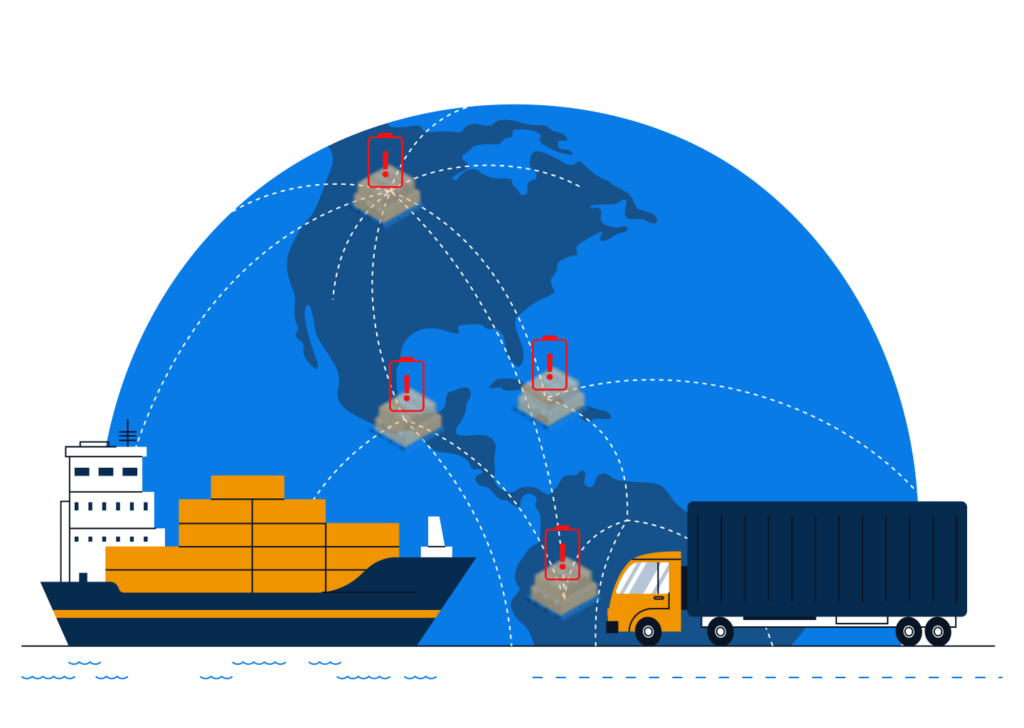
1. The Lifeline of Your Asset Trackers: The Battery
Most returnable asset tracking solutions advertise battery life between three to five years.
For procurement teams, this appears sufficient. For 3PL and warehouse operators, however, advertised battery life shouldn’t matter much. What should matter is performance under your operating conditions.
Battery specifications are typically calculated in controlled environments with moderate reporting frequency and stable temperatures.
High-frequency 3PL movement changes that equation.
Assets that ping location data multiple times per hour consume power significantly faster than low-frequency configurations.
Cold storage environments further reduce lithium battery efficiency, as low temperatures can temporarily decrease available capacity and increase internal resistance.
In sub-zero conditions, effective battery life may fall well below the marketed estimates.
Operations teams should therefore ask practical questions before deployment:
- What is the battery performance at sub-zero or high-temperature warehouse or outdoor environments?
- How does increased reporting frequency affect runtime?
- What is the expected degradation curve over two to three years of continuous movement?
- Is battery replacement or recharging required during the device lifecycle?
Battery reliability is not simply about avoiding device replacement. It directly influences data continuity.
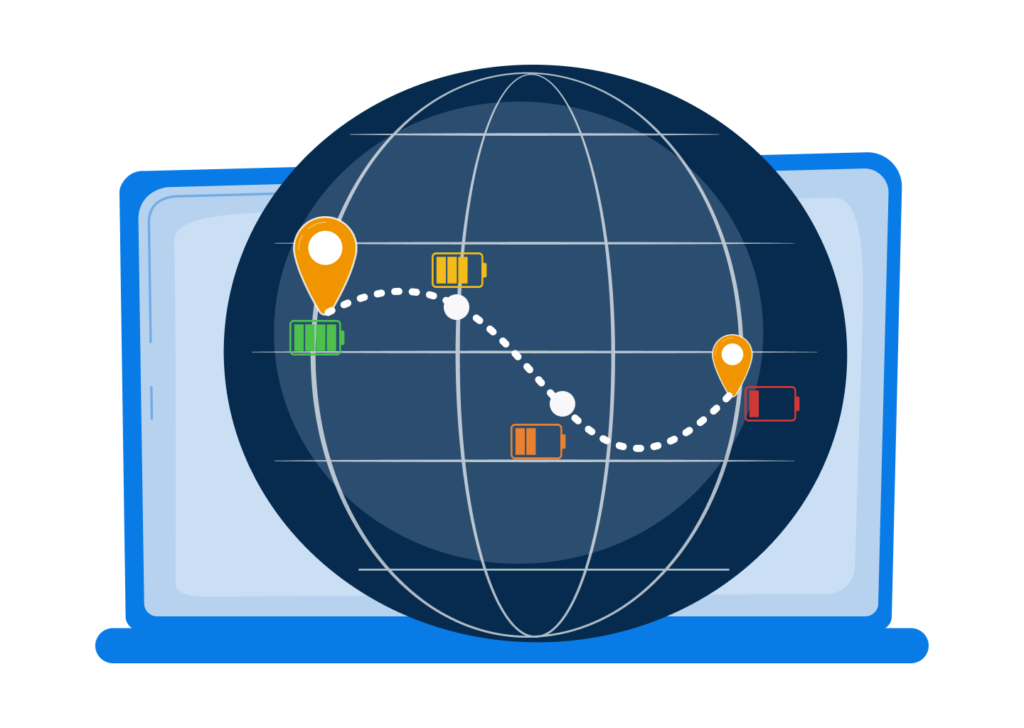
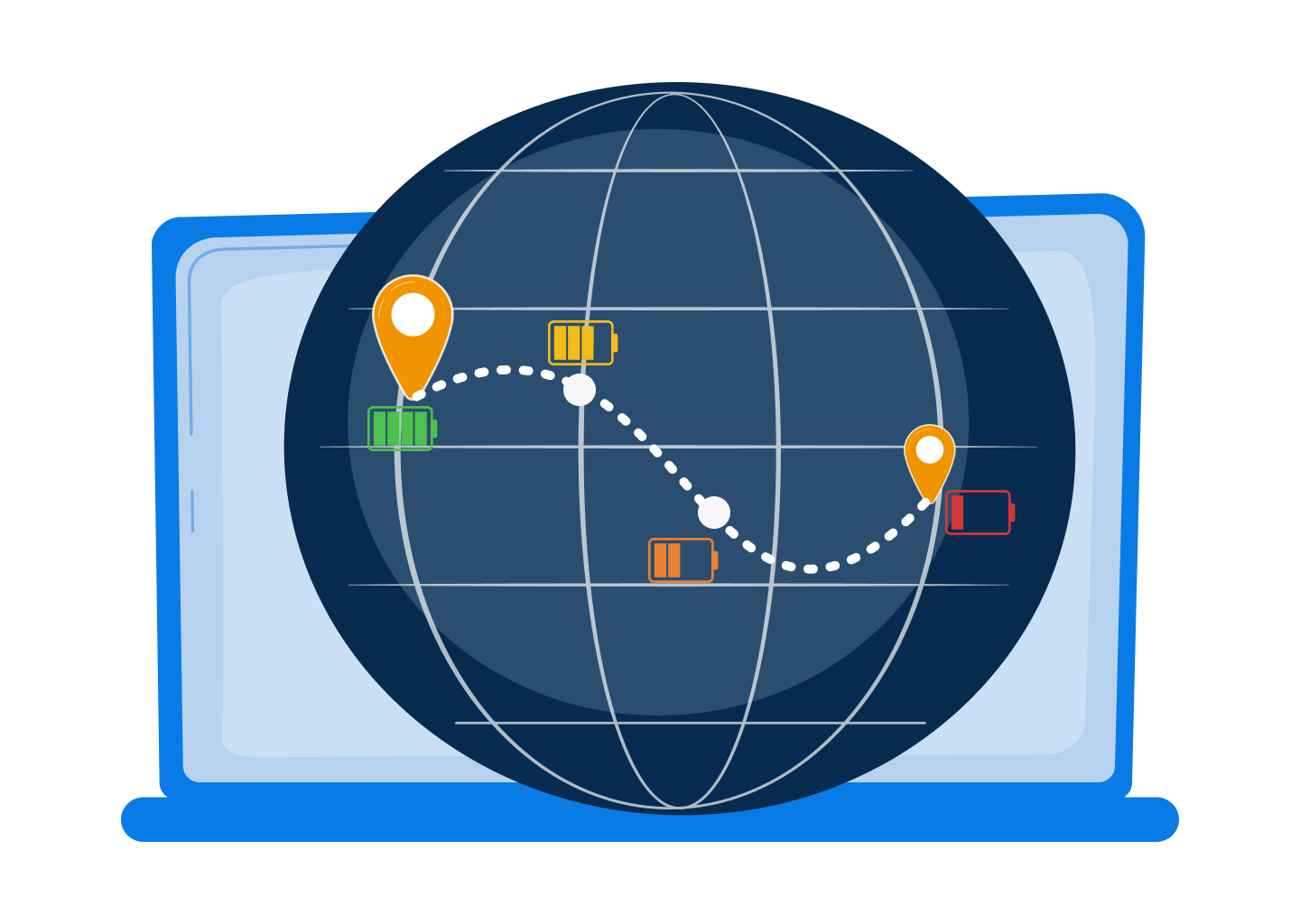
When battery performance degrades gradually, trackers often do not fail outright. Just that they begin reporting inconsistently. Location updates become sporadic. Assets may appear offline during peak movement windows.
This creates uncertainty for operations teams who must determine whether the asset is physically missing or technically unreachable.
Before evaluating dashboard features or analytics layers, 3PL operators should ensure that asset trackers can sustain performance under their specific environmental and throughput conditions.
Without that foundation, every additional feature is really fancy tech sitting on unstable infrastructure.
2. Strength of Connectivity of the Asset Trackers and Platform
In high-frequency 3PL environments, the question is not whether a tracker will go offline at some point. The question is what the system does when it does.
Returnable asset tracking solutions operate across complex physical environments: metal racks, stacked pallets, enclosed trailers, cross-docking facilities, reinforced warehouse structures, and cross-border transit lanes.
Signal obstruction, LTE handoff delays, and temporary network dead zones are operational realities. Even in stable conditions, intermittent connectivity gaps are unavoidable.
The critical evaluation factor is how does the system keep a track of data even when it’s not in sync or online?
When a tracker temporarily loses connectivity, operations teams should understand:
- Does the device buffer data locally during downtime?
- How much historical data can it store before reconnecting?
- Are timestamps preserved accurately when the connection is restored?
- Is there a clear distinction between battery failure, signal obstruction, and actual asset loss?
Without structured offline buffering, temporary connectivity gaps can create permanent data holes.
An asset that fails to report during transit may reappear hours later, but the movement history during that window may be incomplete.
Over time, these fragmented histories reduce confidence in the system. Operations teams begin cross-verifying manually, which reintroduces the very friction tracking was meant to eliminate.
For assets like specialized carrier assets moving across subcontracted networks, this issue becomes more pronounced.
Connectivity resilience should therefore be evaluated alongside battery life. A robust returnable asset tracking solution must ensure data continuity even when real-time transmission is temporarily disrupted. The objective is not just real-time visibility, but complete lifecycle visibility.
If the platform cannot guarantee structured handling of offline events, operational teams inherit the uncertainty.
3. Charging Friction and Device Handling in High-Throughput Environments
In theory, long battery life eliminates the need for frequent charging. In practice, high-frequency 3PL operations make it (slightly) complicated
Even when trackers are designed for multi-year runtime, charging, battery degradation, or device maintenance eventually becomes part of the operational cycle.
With the high frequency needs of 3PL operations, removing trackers for charging can introduce a lot of friction. If charging requires asset disassembly, dedicated charging stations, or manual tracking of device uptime, throughput is affected.
Operators should evaluate:
- Is charging plug-and-play, or does it require manual intervention and tracking?
- Can devices be charged without removing them from circulation?
- What is the recharge time relative to movement frequency?
- Is there visibility into battery health across the fleet?
- What support do asset tracking solution providers give for charging and device maintenance?
In high-volume environments, even minor charging inefficiencies scale quickly. A small percentage of offline devices can translate into hundreds of assets reporting inconsistently.
So, the real filter for 3PL operation heads to consider asset tracking solutions is this: whether managing these rlc trackers in itself requires additional work or does it reduce manual work effectively.
4. Connectivity Resilience in Dense Warehouses and Cross-Border Movement
Connectivity challenges in 3PL environments are incremental, situational, and often invisible until reporting inconsistencies start cropping up.
Warehouses are not clean signal environments. Metal racking systems, stacked plastic pallets, reinforced concrete walls, refrigerated chambers, and enclosed trailers all interfere with wireless transmission.
In high-density yards, hundreds of assets may cluster within a confined radius, competing for network bandwidth. In these conditions, even well-designed asset trackers can struggle if connectivity architecture is not aligned with the environment.
Cross-border movement introduces another layer of complexity. Specialized carriers and RLC trackers moving between EU regions may transition across LTE networks with varying signal strength and roaming agreements.
Also, cross-border connectivity at times requires separate arrangements with the telecom operators, which could further add to the complexity.
Even brief delays in network handoff can create reporting latency. If the system does not manage these transitions intelligently, dashboards reflect temporary silence rather than structured continuity.
3PL operators should evaluate:
- Does the tracker support multi-network fallback when primary connectivity fails?
- How does the system perform in high-density warehouse environments?
- Are yard-level dead zones identified and mitigated during deployment?
- Is reporting frequency adaptive based on signal strength and movement patterns?
- How does the tracking system manage connectivity when assets move across multiple regions or countries with different network providers?
Reliable returnable asset tracking solutions have good connectivity as a structural feature. That enables their platform to reconcile intermittent transmission without distorting lifecycle history. Their timestamps remain synchronized and movement events don’t go blank because of temporary network gaps.
Testing Reliability Before You Scale
Battery life, connectivity resilience, offline buffering, and charging workflow are rarely highlighted as headline features in returnable asset tracking solutions.
Yet for 3PL and warehouse operators, these variables determine whether tracking strengthens operational control or introduces friction.
Returnable asset tracking solutions should be evaluated under real operating conditions.
Reliability must be proven across movement intensity, environmental stress, and regional connectivity variation. For RLC trackers and specialized carrier assets circulating at scale, operational resilience is non-negotiable.
This is precisely why testing before scaling matters.
Before committing to a full fleet-wide deployment, 3PL operators should validate performance in their own warehouse environments, across their own lanes, under their own movement patterns.
A structured pilot allows teams to assess battery performance, connectivity continuity, data buffering, and lifecycle accuracy under real operational stress.
If you are evaluating tracking infrastructure and want to see how it performs in live 3PL conditions before scaling, explore our Pilot Program to test reliability or just let us guide you through a better operational experience with asset tracking solutions.