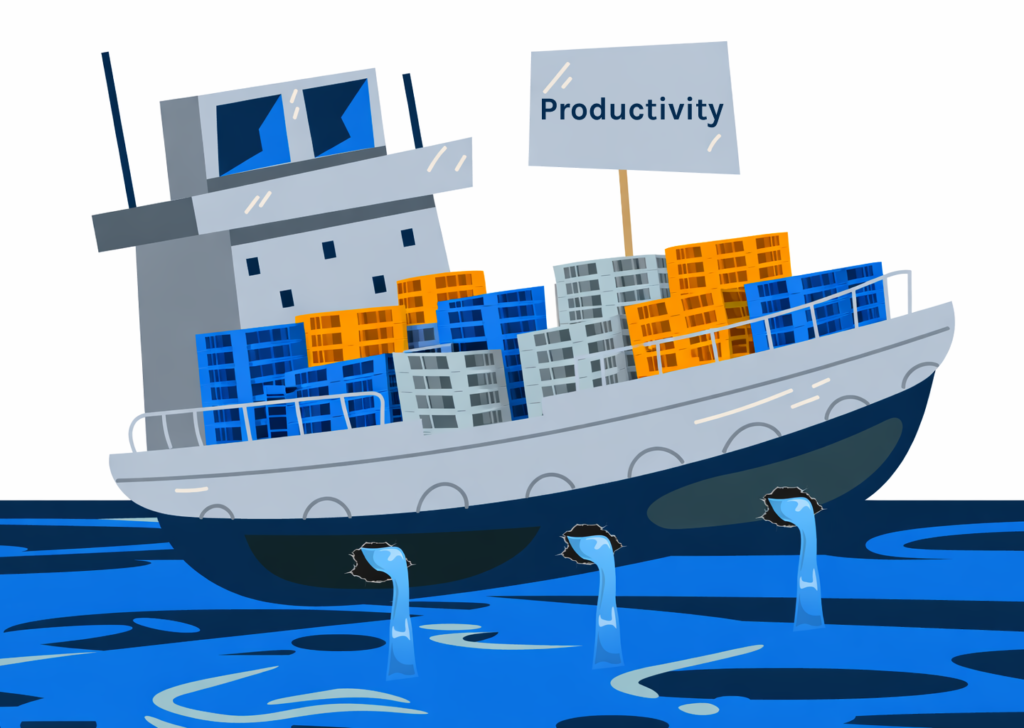
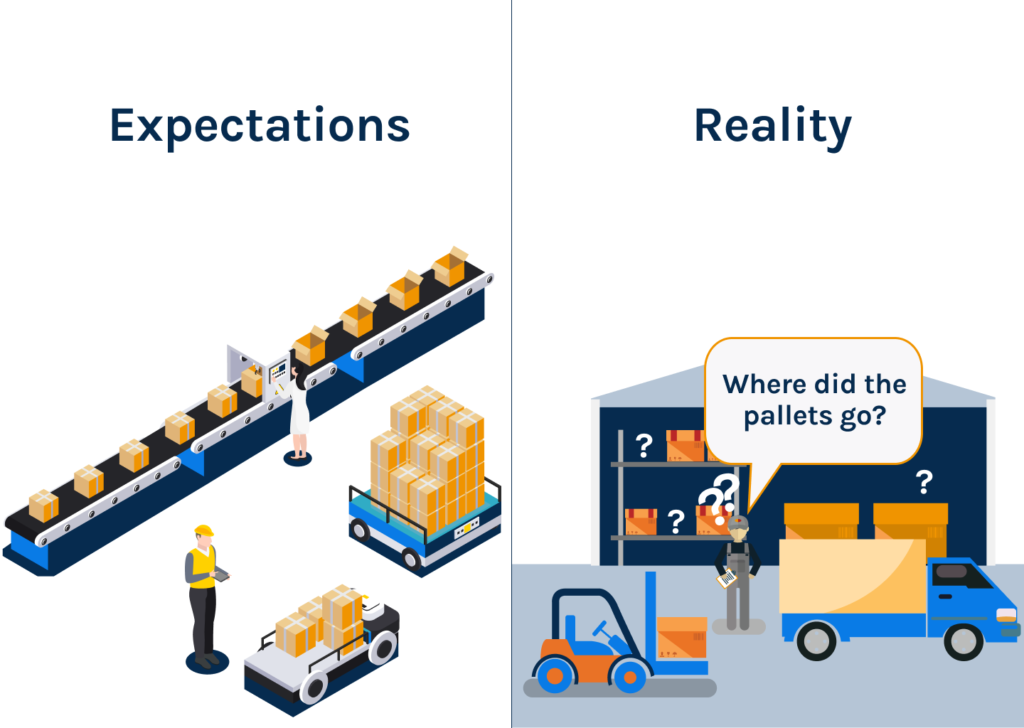
Asset tracking programs and asset tracking solutions implementation don’t survive the initial stages for many supply chain and logistics organizations. The reason is simple – the expectation differs significantly from the reality.
Asset tracking solutions are not just about digital dashboards, but more about increasing data handling capabilities and handling scale, integration challenges (with existing systems – ERP, WMS/TMS), providing operational value upfront to all stakeholders involved, and be able to actually reduce dependence on manual tracking of returnable assets or returnable transport items (RTIs).
The expectation with asset tracking solutions is that of a holy grail solution. Once implemented, it would magically solve every confusion on the shop floor regarding returnable assets.
Not just that, the RoI expectation is quite distant from the actual RoI timelines of the solution. The RoI expectation stems from the belief that the missing RTIs is all about good “hardware” and some analytics.
The integrations, the support, the ability to scale well with the asset fleet, the ability to handle the on-ground complexities well, and the ease of use for the on-ground staff is rarely considered.
This is where this blogs stands.
We want to put out the fallacies in the way returnable asset tracking solutions are implemented majorly, the expectation and the reality.
We’ll talk about the real challenges that orgs face in scaled implementation. Then we highlight in brief, how SensaTrak is consciously built to tackle these challenges.
An added value proposition is our subscription-based pricing model, which you can learn about here.
Read on!
Reasons Why Most Asset Tracking Programs Fail The Test
1. Hard to scale in the real world
Most asset tracking programs look fine during pilots. Limited assets. Limited locations. Controlled movement.
Problems begin when asset tracking solutions are rolled out at scale across thousands of assets, multiple sites, and external partners.
At that point, asset tracking is no longer about the trackers or the connectivity. It becomes a data and operations challenge.
Many asset tracking solutions are not built to handle continuous data volumes, irregular movement patterns, or operational exceptions at scale. What worked during early rollouts starts relying on manual workarounds, delayed data, or simplified assumptions.
This is where many asset tracking programs stall. The technology still works, but it does not evolve into something teams can depend on operationally.
2. Over reliance on just “location” tracking
Most asset tracking solutions are built around one core idea: knowing where an asset is.
Location tracking is useful, but it is not the same as asset tracking.
Industry data suggests that full-scale visibility is still limited when it comes to asset tracking solutions and location data becomes the final output instead of an input into operational decisions.
Dashboards show where assets were last seen, but teams still struggle to understand whether that location is expected, delayed, or problematic.
Also, at times, location isn’t the major problem as much as the condition of the assets. Even if the location is as expected, the asset may have very well been unusable.
Without context, location tracking does not reduce manual effort. Operations teams still rely on calls, spreadsheets, and physical checks to interpret what the data actually means.
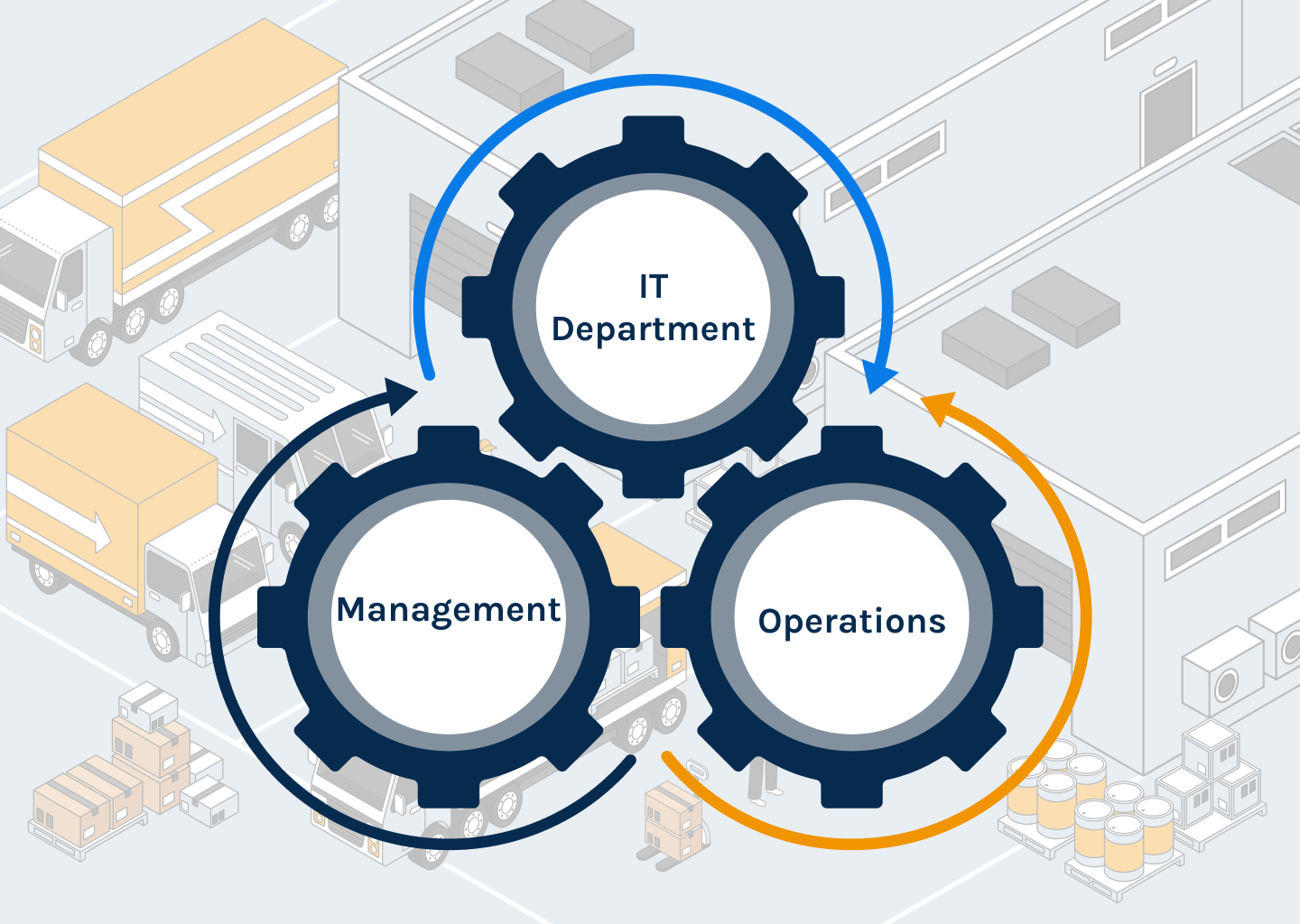
3. Lack of Integration with operations teams & databases
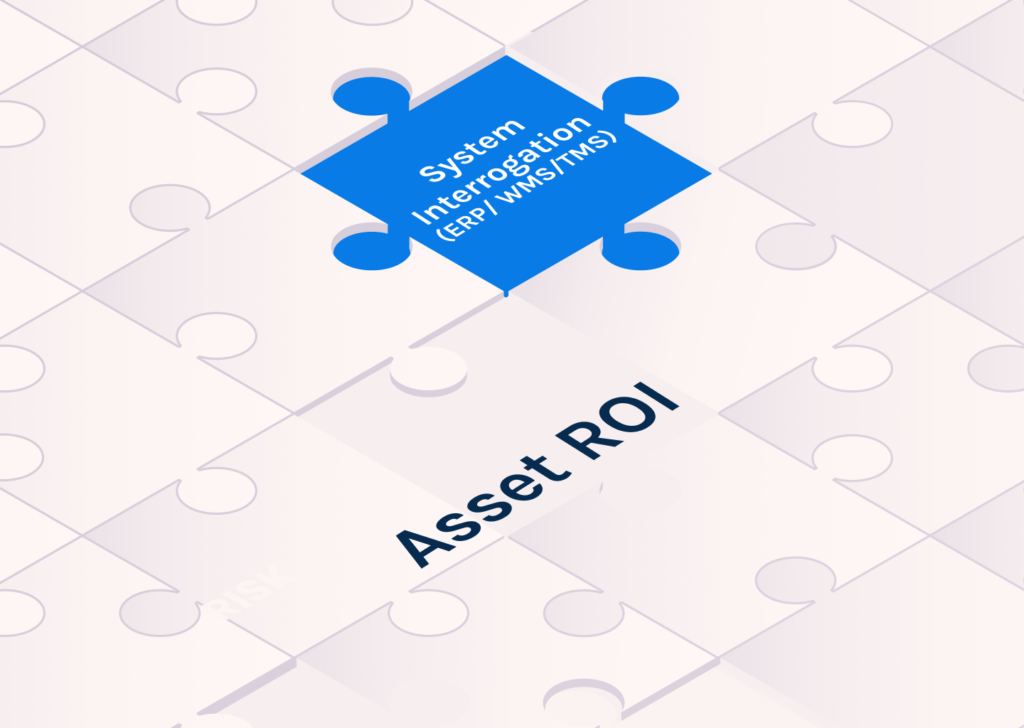
Returnable assets are tied to orders, shipments, customers, and partners. That information already lives in ERP, WMS, and TMS systems.
Many asset tracking solutions operate outside and parallel to these systems.
As a result, asset tracking data sits in a separate dashboard, disconnected from operational workflows. Teams manually reconcile tracking data with shipment records, inventory reports, and partner information.
This breaks trust in the asset tracking program.
When asset tracking solutions cannot integrate cleanly with existing systems, they remain just tracking tools rather than decision-support systems. Over time, usage drops and the program loses internal buy-in.
4. Difficult to use by the on-ground staff
Most asset tracking programs are designed for displaying assets neatly on the dashboards, but not for the people who handle assets daily.
On-ground staff deal with tight timelines, physical constraints, and changing instructions.
When asset tracking solutions require handholding, complex steps for report generation, too much to handle information, and constant app switching, the adoption drops quickly.
Very little investment goes into the training and L&D of the on-ground staff.
Teams are expected to “figure it out” while continuing operations. Very naturally, the inferences drawn fail to become relevant eventually.
5. They rarely eliminate manual tracking
One of the biggest promises of asset tracking solutions is reducing manual effort.
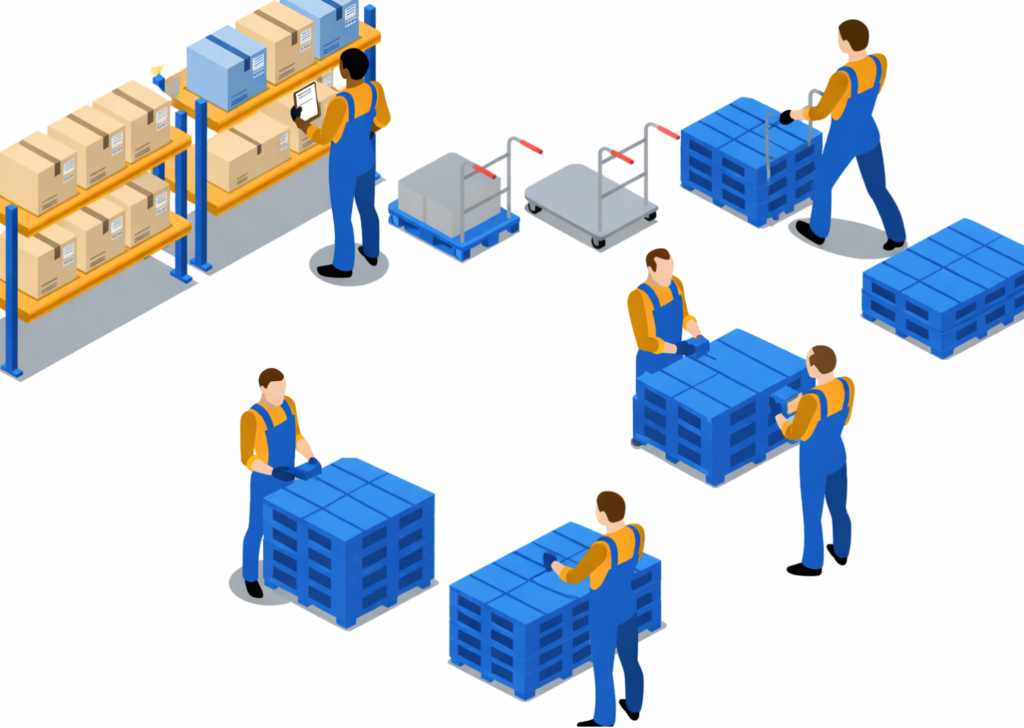
In reality, many asset tracking programs run alongside spreadsheets, calls, and physical checks instead of replacing them.
It’s because a legacy excel sheet is easier to explain than a dashboard where assets are shown sitting idle, but it’s not clear why.
This happens when tracking data lacks context, confidence, or integration. Teams still verify movements manually because the system cannot answer basic operational questions reliably.
Manual tracking hasn’t magically disappeared. Surprisingly, it has remained a challenge until now.
When this happens, the asset tracking program adds workload instead of reducing it, and ROI expectations begin to drift further from reality.
6. Low lifecycle support from the technology vendors
Asset tracking programs do not fail overnight. They slowly lose momentum.
After implementation, many organizations struggle to get timely support, adapt the solution to operational changes, or evolve the system as scale increases.
Asset tracking solutions are treated as static. Stick the trackers once, and you’ll see operational efficiencies.
Sadly, that rarely happens.
As partner engagements evolve, and fleets grow, the lack of proactive support becomes visible. Issues remain unresolved. Confidence drops. Usage declines.
Without sustained support, even well-intentioned asset tracking programs can’t deliver the RoI the board was looking for.
How SensaTrak Is Built to Avoid These Failures
This is exactly where SensaTrak takes a different approach.
SensaTrak is not built as a location-tracking tool that later tries to become an asset tracking solution. It is designed to handle a full-scale asset tracking program (or I should say visibility program) from the start.
The focus is not just on knowing where assets are, but on making tracking data usable at scale. That means handling high data volumes, irregular asset movement, and real operational exceptions without pushing teams back to manual work.
Tracking data is integrated directly with existing ERP, WMS, and TMS systems so assets are always tied to shipments, locations, partners, and ownership. Visibility feeds decision-making instead of sitting in a separate dashboard.
Most importantly, SensaTrak does not rely on assumptions.
We do not track 10 percent of the fleet and extrapolate outcomes for the remaining assets. Every asset is tracked. No sampling. No inference. No blind spots. Full visibility across the entire fleet.
How our pilot program works?
Our pilot program is designed to reflect real operations.
It runs on actual workflows, real asset volumes, and live integrations. This makes it easy to scale from pilot to full implementation without redesigning the system or resetting expectations.
As fleets grow, the same data model, integrations, and operational logic scale with them.
Support does not drop after go-live. Teams get continuous handholding, operational support, and system tuning as usage expands. With us, your asset tracking program evolves with the business instead of falling behind it.
If you want to understand how the pilot works and how quickly it can scale across your entire asset fleet, you can explore the program in detail here.